


Silvopasture Finds New Ground in Modern Orchards
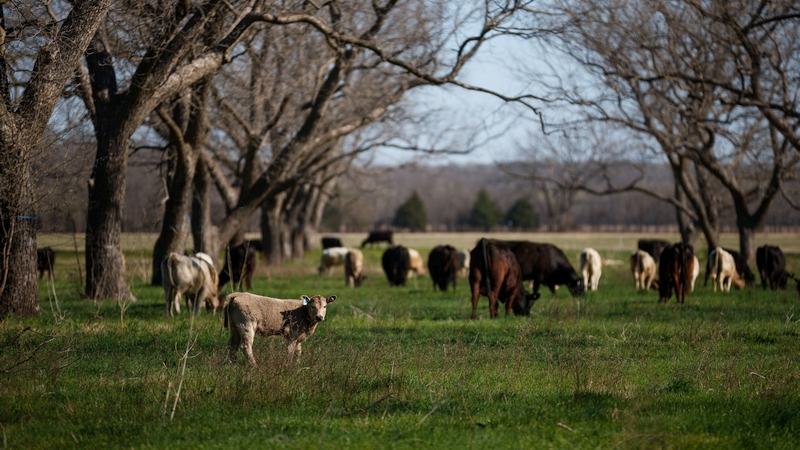
Calves and cows graze, run and play in one of the pecan orchards at Noble Research Institute’s Red River Ranch in Burneyville, Oklahoma.
Silvopasture, the practice of integrating livestock and tree crops on the same acreage, is rooted in some of the earliest human food systems. Charles Rohla, senior regenerative ranching advisor at Noble Research Institute, explains it clearly. “Silvopasture is the oldest form of agriculture. It is combining trees with livestock so you can have two enterprises on the same piece of property.”
The United States moved away from this integrated model as settlers pushed into wide-open land. Livestock grazed in open fields, and tree crops remained isolated. “When we came to America, we forgot about silvopasture because we had massive amounts of land,” Rohla says. Europe, meanwhile, continued to use silvopasture as a standard practice, keeping the knowledge alive. Interest in the U.S. has now surged, driven by production costs, weather-related stress, and the need for a steadier income.
Two Revenue Streams with Less Volatility
Silvopasture offers a straightforward advantage. It supports two income sources on the same acreage. Pecan growers, for example, see natural risk balancing when cattle are added to an orchard. Rohla explains, “You can maximize your profitability because you are diversifying those risks. If pecan prices are down, most of the time cattle prices are high.”
Noble Research Institute tracked this dynamic over 19 years of pecan orchards grazed with cattle. The study found that pecans delivered stronger returns in most years. The cattle enterprise carried the operation during price slumps. “In the years that prices were low, the cattle kept the operation in the positive. If we did not have the livestock, there would have been years we would have lost money,” Rohla says. In a period of rising input costs and tightening margins, that resilience matters.
Soil Health Improves with Proper Grazing
Economic resilience is only part of the equation. Livestock can improve soil conditions when managed with intention. Animals add organic matter, return nutrients to the soil, and break pest and vegetation cycles. “We are using the livestock to mow instead of equipment, fuel, and time,” Rohla notes. This shifts a recurring expense into a biological process that benefits trees.
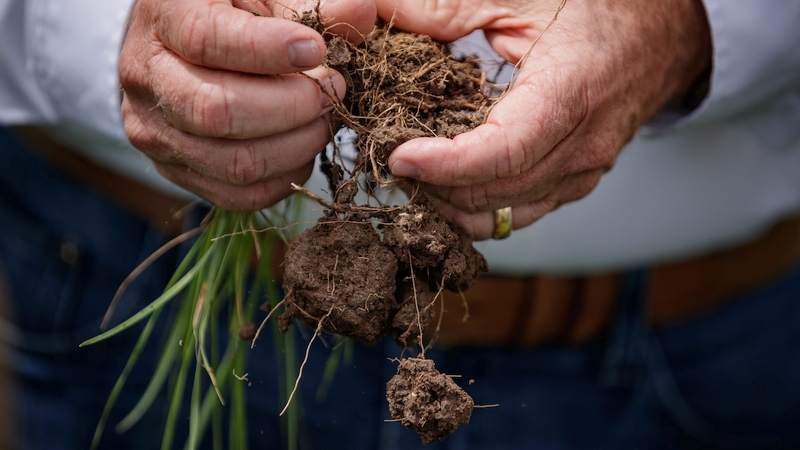
Ruminants contribute further by enhancing soil biology. “All the microbes that are in the stomach are the same ones that we find in the soil,” Rohla says. “You are inoculating that soil with additional microbes.” Active soils then break down manure rapidly, often within a week, during peak microbial activity. Fast breakdown reduces contamination risks and boosts nutrient availability.
Increased organic matter also improves water infiltration and retention, a valuable advantage as water costs rise. More organic matter means better moisture storage around tree roots, supporting both forage production and orchard health.
Managing the Known Risks
Silvopasture requires attention to tree vulnerability, soil compaction, and food safety regulations. Young orchards are at the highest risk. Spring leaves are high in protein, so animals may begin to feed on them. Bark damage can occur if livestock remain in one location too long. Fresh manure piled around trunks can burn roots due to its high nitrogen concentration.
Compaction is a common concern, especially for growers unfamiliar with adaptive grazing. Rohla emphasizes movement. By rotating livestock frequently and leaving forage residue on the ground, hoof pressure is cushioned. Animals also avoid congregating under trees, reducing the risk of root-zone compaction. “If we graze properly, we eliminate those concerns,” he notes.
Food safety rules under the Food Safety Modernization Act (FSMA) raise additional questions for orchard crops. Timing solves most of these issues. Rohla recommends grazing after harvest, with sufficient time before the next crop cycle for manure to break down. “Animals do not have to be out in the orchard 365 days a year,” he says. “The timing of grazing is a big one.” Adaptive grazing increases microbial activity, accelerating manure decomposition and reducing the risk window.
A Practical, Scalable System
Silvopasture is not a niche practice. It is a practical system that enhances orchard profitability, reduces inputs, and builds healthier soil. The model succeeds when growers match grazing intensity, timing, and tree protection with disciplined execution.
If you manage an orchard and want to evaluate silvopasture’s suitability, begin with a field assessment. Identify tree age, spacing, forage availability, and water access. Then design a rotation plan that protects young trees and complies with FSMA timing requirements. For support, contact Noble Research Institute to review your site conditions and develop a grazing plan tailored to your operation.