Wish Farms Betting Big on Organic Blueberries Posted by Paul Rusnak|February 22, 2018 State-of-the-art operation in Central Florida built and equipped to meet growing marketplace demand. Read More
Less Common Squash and Pumpkin Varieties for Growers To Pick and Choose By Carol Miller|October 14, 2026
Syngenta Names New Leader for Its North American Crop Protection Operations Posted by Growing Produce Staff|October 13, 2026
How AI-Powered Drones Are Taking More Growers Beyond Crop Scouting By Andrew Mabry, ZenaDrone|October 13, 2026
Florida Blue Farms Digging Data for Savings and Profit By Frank Giles|January 17, 2018 Florida Blue Farms built on a plan to preserve quantity and quality of water resources.
New Early, Low-Chill Blueberry Varieties from Oregon Blueberry Farms and Nursery Posted by Christina Herrick|December 15, 2017 For more information on these varieties, contact Oregon Blueberry Farms and Nursery Oregon Blueberry Farms […]
Sustainable Practices Make Perfect for Florida Farmers Posted by Paul Rusnak|November 2, 2017 Industry leadership award honorees stand out in setting new standards through innovative technology and BMPs.
Florida Blueberry Growers Challenged to Maintain Momentum By Dudley Calfee|September 26, 2017 After a nice rebound last season, resiliency is sure to be tested.
Ways Florida Blueberry Growers Can Elevate Their Message By Candace Munz|September 21, 2017 Promotional efforts seek to harness power that drives the Sunshine State’s ‘little blue dynamos.’
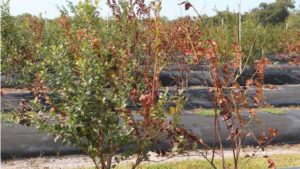
Getting to the Bottom of Bacterial Wilt in Blueberries By Philip F. Harmon | Deanna Bayo|September 20, 2017 Prolific plant pathogen now presenting a new challenge for Florida producers and researchers.
Looking Beyond Soil pH in Berries By John Kempf|August 27, 2017 Acidic soil is a foundation for blueberry growing, however the plant needs more than high pH to grow large, firm fruit.
Southern Highbush Berries Have Turned the Blueberry World Upside-Down By John R. Clark|July 2, 2017 Berry industry revolutionized thanks to the introduction of low-chill varieties.
Study Zeroes in on Sweet Spot for Florida Blueberries Posted by Paul Rusnak|June 27, 2017 Taste test proves farmers, marketers, and parents should be cognizant of kids’ consumer clout.
Florida Farming Pioneer Still Making the Honor Roll Posted by Paul Rusnak|May 4, 2017 Alto Straughn presented with University of Florida’s Distinguished Alumnus Award.
Florida Farming Family Staying on Top of the Blueberry Game By Frank Giles|April 13, 2017 The Hill family of Southern Hill Farms continues to up their efforts to diversify business and stay out ahead of a competitive market.
North Carolina Blueberry Crop Still Kicking By Christina Herrick|April 10, 2017 Thanks to pruning cuts and a diverse mix of cultivars, the majority of the crop survived a series of March freezes.
Study Shows Bumblebees Can Boost Blueberry Yield Big Time Posted by Paul Rusnak|April 6, 2017 UF/IFAS researchers find placing hives of the distinct pollinator in the field pumps up output by 70%.
Florida Blueberry Crop Escapes Slap from Late-Season Cold Snap By Paul Rusnak|March 25, 2017 Freeze protection tactics prove fruitful as local producers look to gain from Georgia’s loss.
Florida Blueberry Growers Counting on a Comeback By Paul Rusnak|February 17, 2017 With last season’s disaster in the rear view, all eyes are searching for bluer skies.
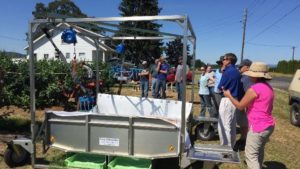
Researchers Develop Lower-Cost Options For Blueberry Harvest Assist Systems By Christina Herrick|November 28, 2016 Research team seeks alternatives to over-the-row harvest systems.
Florida Blueberry Growers Warned To Watch For New Deadly Disease Posted by Paul Rusnak|November 16, 2016 Pathogen has been confirmed on three farms so far.
Time Is Now For Florida Blueberry Growers To Dig In By Dudley Calfee|September 24, 2016 Coming off a challenging season, industry players must continue to adapt to curveballs thrown by Mother Nature and market forces.
What U.S. Consumers Think About Florida Blueberries By Tori Bradley|September 23, 2016 For growers, the good news is that shoppers like what you are serving up. But more can be done to whet appetites.