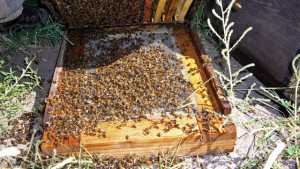
Findings from nationwide survey of beekeepers include an average honey bee colony loss of 62% between June 2024 and February 2025.
Colony Collapse Disorder never really went away; reports of widespread honey bee colony losses are increasing.
Longer, warmer autumns mean more flying, raising chance of colony collapse in the spring.
Learn more about what was discovered regarding the metabolic pathway of honey bees.
Researchers and beekeepers are getting a better understanding how genetic traits, characteristics, and even color impact behavior in colonies.
Find out how scientists are developing electronic ‘veterinarians’ for these important pollinators.
Cornell University’s NYS Beekeeper Tech Team recent report also shows most hives are infected with Deformed Wing Virus (DWV), a disease linked to the mites.
The latest research into Colony Collapse Disorder is focused on a number of issues facing bee populations.
Two researchers at New Mexico State University (NMSU) are working on a project testing native and non-native plants for their ability to attract and retain pollinators.
The ongoing crisis over honey bee losses and the cost to rent hives has producers looking for reliable […]
Since the latest rounds of honeybee disappearances was noted in 2006, study into its causes has been frenetic. […]
Michigan State University (MSU) researchers for the first time were able to produce in the laboratory proteins that help […]
Dennis vanEngelsdorp, the Pennsylvania Department of Agriculture’s acting state apiarist, began a recent presentation with this startling statistic: […]