Four major North American beekeeping organizations partner to release the first-ever North American Bee Strategy. Learn more about this coordinated effort.
Alarmingly high levels of viral infections and mite resistance among latest USDA research findings on 2025 honey bee casualties.
Stormy weather in California, coupled with major hurricane impacts in Florida, could mean a not-so-sweet year for important pollinators.
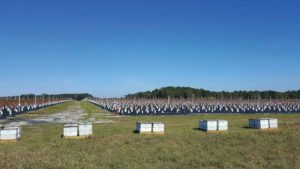
Growers face the question of how many honey bee hives to stock their fields with to maximize pollination. The answer seems to lie beyond their field edges.
Members of the IR-4 Project say changes could negatively impact availability of products that help keep honey bee colonies healthy.
Learn more about what was discovered regarding the metabolic pathway of honey bees.
USDA grant will provide money for growers to expand the habitat and forage for honey bees.
Reports indicate nearly 15% of the nation’s bees were put in peril by the monster storm.
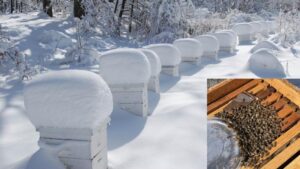
Studies show a line of bees developed by USDA-ARS is more than twice as likely to make it through the cold months than standard honey bees.
Researchers and beekeepers are getting a better understanding how genetic traits, characteristics, and even color impact behavior in colonies.
Amygdalin component, also found in cherries, nectarines, and apples, acts as an antibiotic.
Find out how scientists are developing electronic ‘veterinarians’ for these important pollinators.
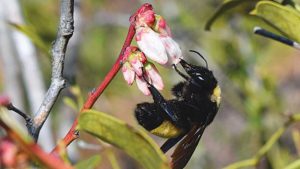
Swarm of researchers set out to find and recommend the best ways and time for bringing bees and blueberry plants together.
Management of honey bees and bumble bees can contribute to optimal fruit set and better yield.
More than 2,000 hives were reported stolen last year from California almond orchards, and growers are cautioned to keep an eye out for unmarked hives.
As many as 1,700 bee hives have been stolen from California orchards this year – and those are only the reported thefts. As the price of pollination continues to increase, so do hive thefts.

A single-celled parasite may be infecting bee larvae.