The New York State (NYS) IPM Program, New York State Department of Agriculture and Markets, and the Northeastern IPM Center are […]
Growers in at-risk states have a new tool in the fight against this invasive pest.
Agenda to include exploring the damage potential of spotted wing drosophila, bacterial spot management, and new varieties.
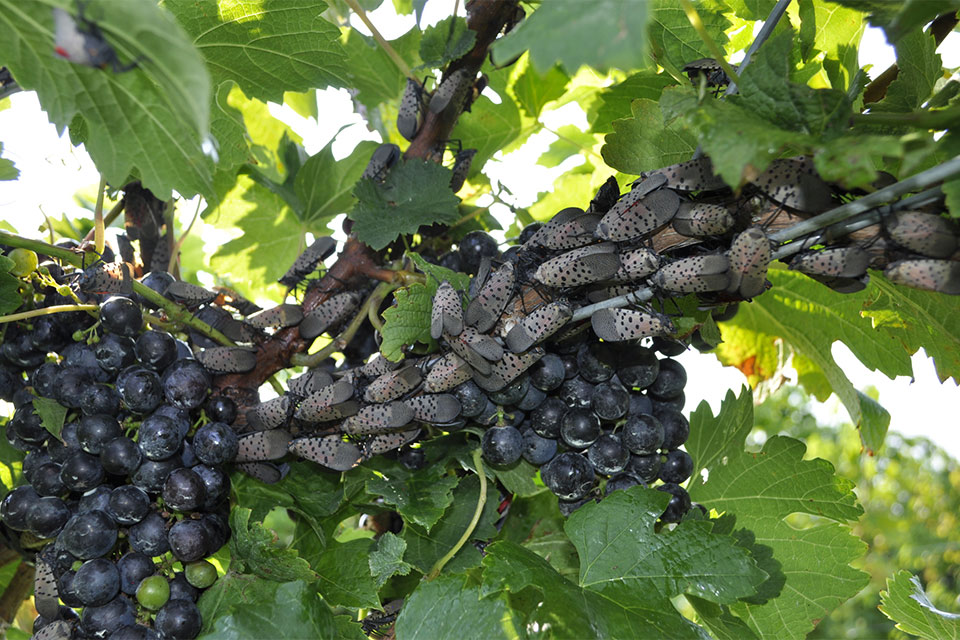
Spotted Lanternfly, SWD, Grape Splitting Among topics at this year’s B.E.V. NY.
Two young orchards, one in Merced and one in Kern County, tested positive for the peach root-knot nematode on Nemaguard and Hansen 536 rootstocks.
Multiple university researchers teamed to learn whether pruning could make the canopy climate less suitable for SWD in blueberries and raspberries.
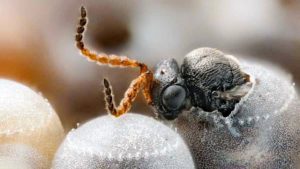
Researchers discover first instance of samurai wasp where population re-establishes on several sites.
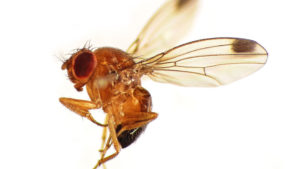
A team of researchers from China discovered spotted wing drosophila prefer traps using brewer’s yeast, the dregs after beer production.
Adult male found in county near border of Pennsylvania and Delaware.
State agriculture department officials and USDA announce another successful eradication of the invasive pest in Miami-Dade County.
Penn State trial looked at efficacy of 20 insecticides, some not labeled for the pest meanwhile New York grape growers can use a few biological controls.

Threat of invasive pest widens for fruit growers in the Empire State.
Recent model simulations for 2050 and 2100 show warmer temperatures likely to aid in brown marmorated stink bug’s migration patterns to the North.
Team from Virginia Tech uncover how the pests produce these chemical compounds, which could aid crop protection efforts.
Invasive pest continues to spread its wings; now confirmed in three New Jersey counties.
Recent inspections for the invasive pest compel USDA officials to remove previously impacted portions of Miami-Dade County from quarantine.
Quarantine expands as feared fruit pest is found in county not adjacent to first find in state.
While the find wasn’t unexpected, the pest’s early emergence in Virginia has surprised local entomologists.
Researchers confirm trap captures of the notorious pest are six times higher this year compared to previous seasons.