



Growing Sweet Potatoes in the Pacific Northwest
 March 2, 2026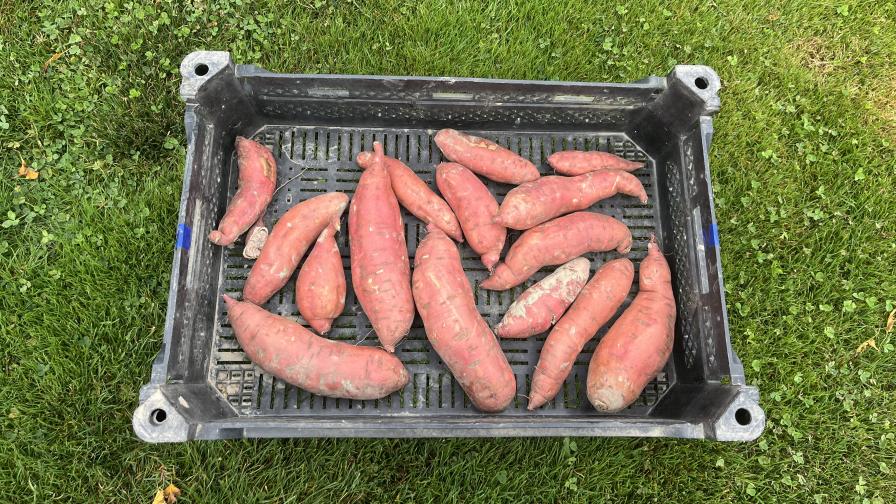
Sweet potatoes from research plots at Washington State University Northwest Washington Research and Extension Center.
Photo: Washington State University
Once considered unsuitable for the Pacific Northwest, sweet potatoes are now proving to be a strong contender for growers exploring alternative crops. Warmer seasons, market interest, and ongoing research into pest-resistant varieties are helping this crop take root.
Sweet Potatoes in the Northwest
I’m currently working on introducing sweet potatoes into commercial production in northwest Washington. With our Mediterranean-like climate and increasingly warming temperatures, the crop is proving well-suited to the region — especially given our long summer days. My first trials began in 2019, and this year several dozen small-scale growers successfully grew and marketed sweet potatoes locally.
Covington has performed well in terms of yield, but its susceptibility to wireworm remains a major concern, as even cosmetic damage can render roots unmarketable. To address this, we’ve been screening breeding lines for wireworm resistance, and in 2025 USDA released ‘Cascade’, a resistant cultivar co-developed with Washington State University. We also conducted successful trials of purple-flesh sweet potatoes this year, which show strong market promise.
Local growers are finding receptive customers in farmers’ markets and regional outlets, where interest in healthy, locally grown foods continue to rise. Sweet potatoes align well with those preferences, making them an increasingly attractive alternative crop for our area.
Key Practices for Successful Cultivation
For growing sweet potatoes, soil type is critical. Heavy clay soils make it difficult for roots to form properly, and harvest becomes especially challenging in northwest Washington, where rains typically begin in mid-September. To ensure a healthy start, growers should order slips from reputable suppliers, as some sources have distributed slips contaminated with scurf.
Understanding wireworm pressure in each field is essential. If pressure is moderate to high, growers should choose a resistant cultivar — even though these varieties tend to yield less — because susceptible cultivars can suffer enough cosmetic damage to make the entire crop unmarketable.
Harvesting before the onset of heavy fall rains is also important, as excessive soil moisture can cause lenticels to swell and reduce root quality. Additionally, sweet potato vines are edible and can serve as nutritious livestock feed. Growers can cut and remove vines prior to harvest and use them as forage for livestock.
Market Opportunities Ahead
In northwest Washington, the market outlook for locally grown sweet potatoes is strong, driven by consumer interest in nutritious, regionally produced foods. Growers should consider both root color and yield potential when selecting cultivars, as different markets may favor orange, white, or purple flesh types. Trialing several cultivars is recommended to determine which varieties perform best under specific farm conditions and meet customer preferences.
As demand continues to grow, sweet potatoes offer a promising niche crop for growers looking to diversify and tap into local market opportunities.
Subscribe Today For
