



What To Know About New Fusarium Species Found in Potato Storage
 April 15, 2026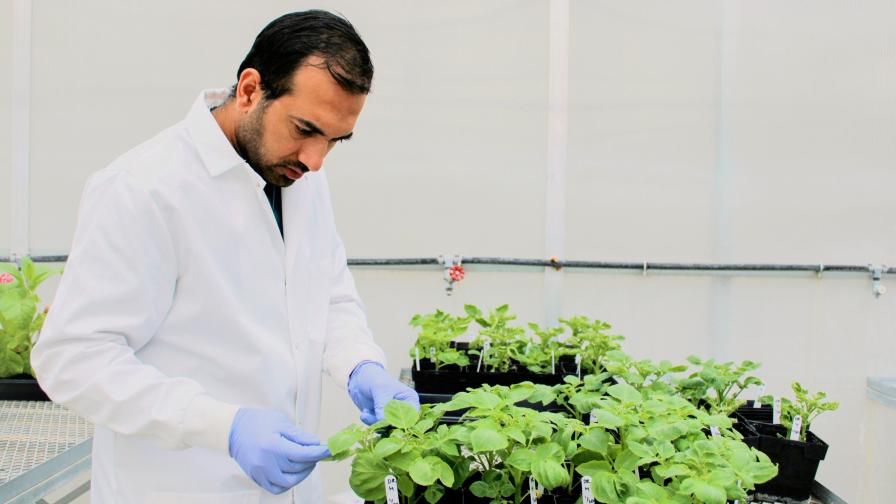
Dr. Hafiz M. Usman Aslam conducts laboratory work to identify Fusarium species associated with potato dry rot.
Photo: Colorado State University
Fusarium dry rot remains one of the most damaging potato storage diseases, but new research out of Colorado shows the problem may be more complex than many growers assume.
A recent study conducted at Colorado State University’s San Luis Valley Research Center identified four Fusarium species responsible for dry rot in stored potatoes — including one not previously reported in the U.S. as a cause of the disease.
That matters because not all Fusarium species behave the same, and differences in aggressiveness can influence how losses develop in storage.
What Researchers Found
Potato tubers with dry rot symptoms were collected from fields and storage facilities across Colorado’s San Luis Valley during the 2023 and 2024 seasons. Using both visual and molecular identification methods, researchers identified four species associated with the disease:
- Fusarium sambucinum
- Fusarium solani
- Fusarium oxysporum
- Fusarium clavum
The detection of Fusarium clavum is particularly notable. It has not previously been reported in the U.S. as a cause of potato dry rot, underscoring the diversity of pathogens present in storage systems.
The study also found clear differences in how aggressively these species cause decay. Fusarium solani produced the most severe tuber breakdown in trials.
Variety also played a role. ‘Soraya’ showed the highest susceptibility, followed by ‘Russet Norkotah 278’, while ‘Canela Russet’ demonstrated greater tolerance under the same conditions.
Why It Matters in Storage
Fusarium dry rot typically develops when pathogens enter tubers through wounds created during harvest, cutting, or handling. Once established, infections lead to dry, sunken lesions and internal decay that can result in significant storage losses.
The presence of multiple Fusarium species — each with different levels of aggressiveness — reinforces the importance of limiting entry points and managing storage conditions carefully.
Reducing Dry Rot Risk
While the pathogens may vary, the fundamentals of dry rot management remain consistent. Success depends on minimizing wounds and creating conditions that limit infection and spread.
Start with clean seeds. Inspect seed lots carefully before planting and remove tubers showing signs of rot.
Handle seeds to avoid injury. Warm seed tubers to at least 50°F before cutting. Cold tubers are more prone to shatter bruising, which creates entry points for Fusarium.
Keep cutting operations clean. Use sharp knives to promote clean cuts and faster healing. Sanitize equipment regularly and remove rotted tubers before cutting.
Consider fungicide treatments. Seed piece treatments labeled for Fusarium can help reduce decay from seedborne pathogens.
Harvest under the right conditions. Wait until skins are set and tuber pulp temperatures are above 50°F. Minimize mechanical damage during harvest and handling.
Promote wound healing. Healing is most effective at about 55°F with high humidity (above 90%) and good airflow. Proper healing reduces the chance of infection during storage.
Manage storage conditions. After healing, gradually lower temperatures to avoid condensation. Store potatoes as cool as possible for the intended market, typically 38°F to 40°F for table stock.
Monitor storage closely. Regular inspections help catch problems early. If rot develops, move affected lots sooner and remove decayed tubers during grading.
RELATED CONTENT: Can You Spot the Difference? Diagnostic Pitfalls in Potatoes
The Bottom Line
This research highlights how complex Fusarium dry rot can be in storage. Multiple species may be present, and some are more aggressive than others.
For growers, the takeaway is straightforward: preventing wounds, promoting healing, and maintaining proper storage conditions remain the most effective ways to limit losses — regardless of which Fusarium species are present.
Note: This work was completed under the supervision of Dr. Mohamad Chikh-Ali, Program Leader of Plant Pathology at the San Luis Valley Research Center, Colorado State University, with laboratory assistance from Jeremy Daniel.
Subscribe Today For
