


Success on the Farm With Irrigation Built for Uncertainty
 January 7, 2026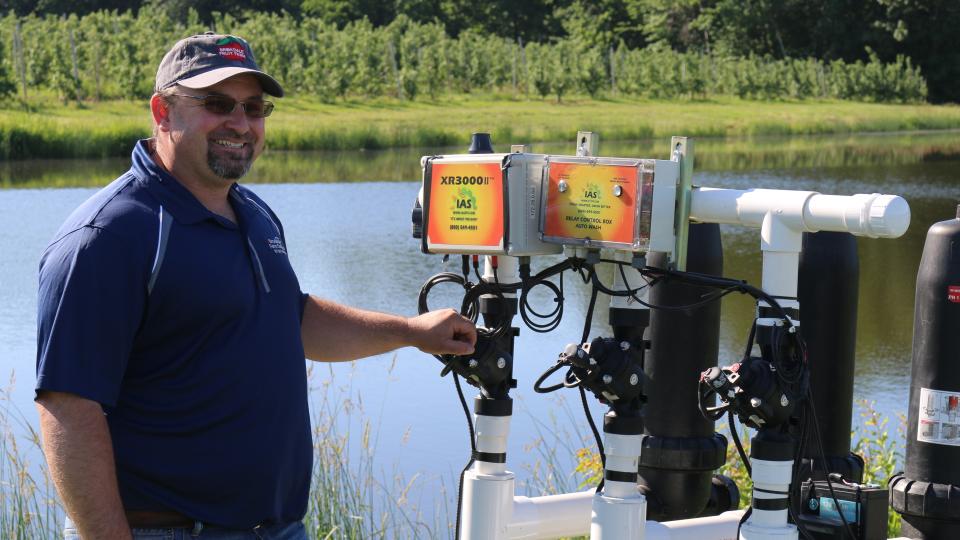
A versatile irrigation can go a long way on your farm. Brookdale Fruit Farm’s Trevor Hardy touts the benefits of an onsite irrigation filter system that filters water from an adjacent pond down to 100 microns to prevent clogging in drip emitters.
Photo by Thomas Skernivitz
For much of the Northeast U.S., irrigation has shifted from a seasonal supplement to a year-round necessity. Variable rainfall, shallow soils, and limited water sources mean growers can no longer rely on “normal” seasons to carry a crop from planting to harvest. Trevor Hardy has watched that shift unfold for decades, first on his family’s seventh-generation farm in New Hampshire, and later through his work with growers across the region.
Brookdale Fruit Farm began using drip irrigation in the late 1980s, when the practice was still considered a luxury. Today, Hardy says irrigation is no longer optional.
“People can’t plant or produce crops without irrigation now,” he says. “Whether you call that climate-driven or not, growers recognize they need to be able to water and fertigate throughout the growing cycle if they want consistent yields.”
Hardy’s perspective is shaped by more than his own operation. In addition to managing Brookdale’s diversified fruit and vegetable acreage, he owns a regional irrigation and farm supplies business and currently serves as president of the New England Vegetable & Berry Growers Association. That combination puts him in constant conversation with growers facing the same constraints: surface-water dependence, labor shortages, and increasingly erratic weather.
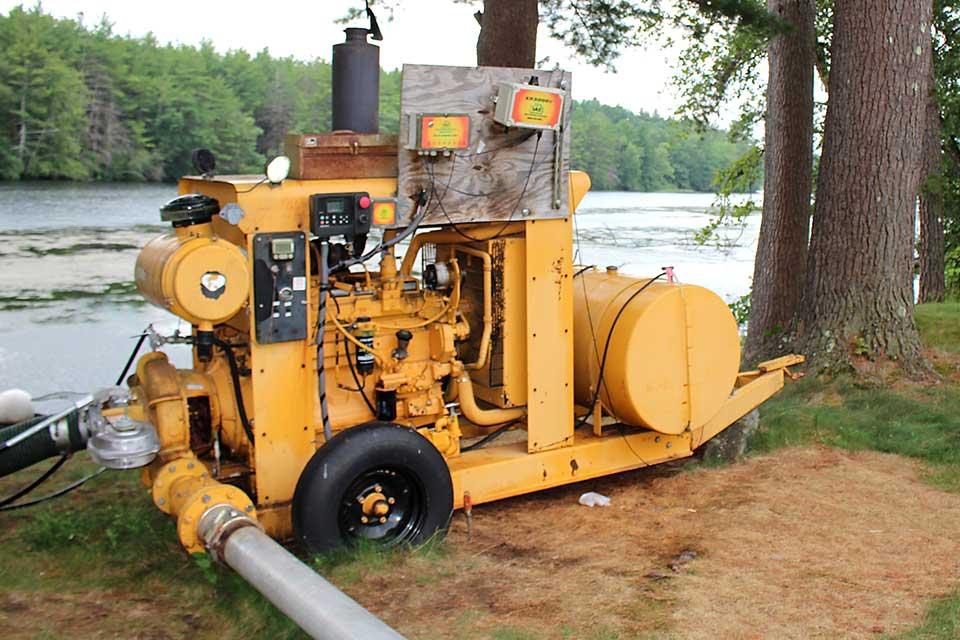
A river-fed pumping station anchors Brookdale Fruit Farm’s surface-water irrigation system.
Photo: Brookdale Fruit Farm
Why Drip Became the Standard
In New England, more than 95% of growers irrigate from surface bodies of water rather than wells. Once a pond or river source runs low, there are few alternatives.
“That’s what pushed the transition from overhead to drip,” Hardy says. “It wasn’t about maximizing yield at first — it was about water conservation and being able to make it through the season.”
Drip irrigation allows growers to stretch limited water supplies and apply nutrients and crop protection products more precisely. Over time, that efficiency has made drip the regional standard.
Hardy describes drip tape as “cheap insurance.”
“Some growers skip buying drip tape in a wet spring, thinking they won’t need it,” he says. “Then it turns dry, and that decision comes back to bite them. Drip is one of the lowest-cost inputs that can save a crop, whether you end up using it or not.”
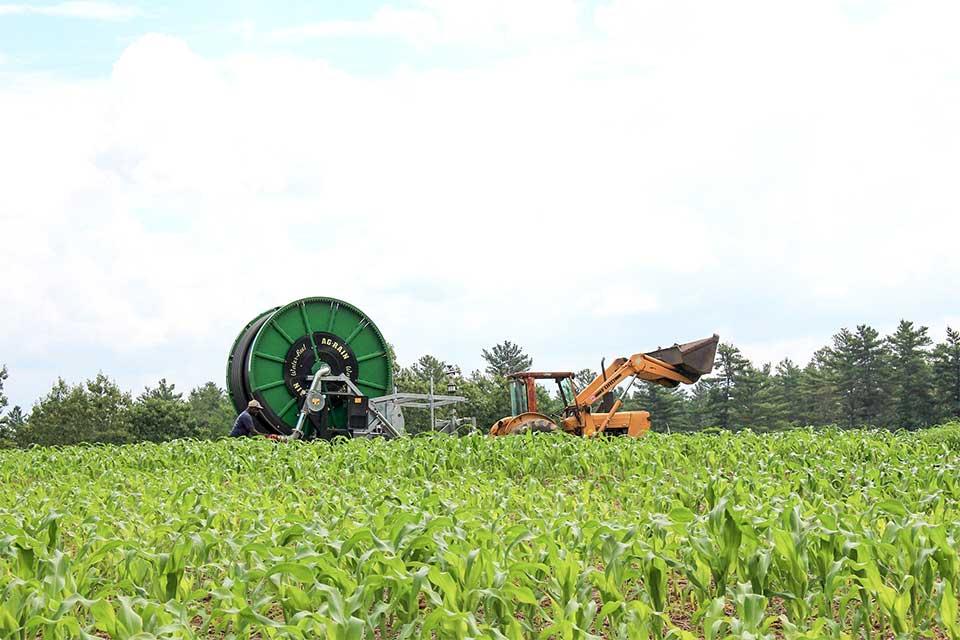
An irrigation foreman installs drip tape in sweet corn, reflecting the farm’s emphasis on efficient water delivery and labor-aware system design.
Photo: Brookdale Fruit Farm
Designing Farm Irrigation Systems That People Can Actually Run
As irrigation systems became more common, Hardy noticed a different challenge emerging: miscommunication between management and crews.
“When fertigation rates or run times aren’t executed correctly, it’s rarely because someone didn’t care,” he says. “It’s usually because the system was too complicated.”
When it comes to fertigation schedules, he keeps it simple.
On Brookdale’s farm and through his supply business Hardy standardized fittings, filters, injectors, and flow rates so systems could scale across fields and seasons. The goal was repeatability.
“If you can give people a simple, repeatable program, you can get buy-in,” he says. “Once you have that, you can improve it over time.”
That philosophy led Hardy to develop fertigation “playbooks” that tie application rates to irrigation volume, giving growers a starting point they can adjust for soil type, crop, and weather.
“If you don’t give people something to start with, they can’t improve it,” he says.
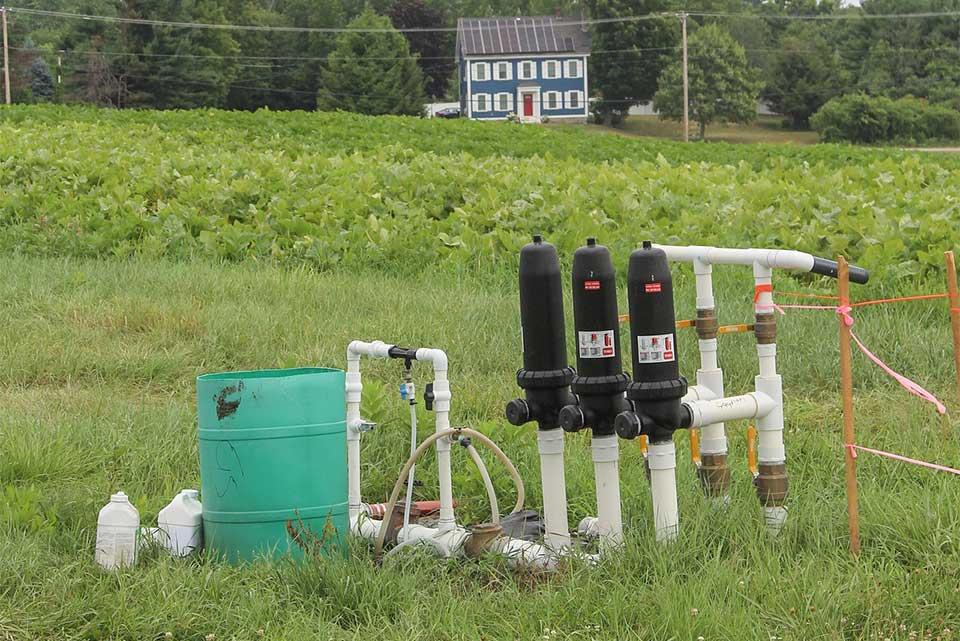
A portable filtration and injector setup supports fertigation and rapid field-to-field rotation.
Photo: Brookdale Fruit Farm
Pairing Irrigation with Soil Health
“If you can give people a simple, repeatable program, you can get buy-in,” he says. “Once you have that, you can improve it over time.”
That philosophy led Hardy to develop fertigation “playbooks” that tie application rates to irrigation volume, giving growers a starting point they can adjust for soil type, crop, and weather.
“If you don’t give people something to start with, they can’t improve it,” he says.
“That rotation lets us capture soil health benefits without giving up the efficiency of drip where it makes sense.”
Fertility management has evolved alongside that approach. Instead of broadcasting nutrients in one or two applications, Brookdale applies roughly 40% to 45% of a crop’s nitrogen upfront and fertigates the remainder as the crop demands it.
“Plants don’t want to eat once or twice a year,” Hardy says. “They want consistent feeding, just like crops in a high tunnel.”
That flexibility allows the farm to respond to weather swings, adjusting nutrition ahead of cloudy stretches, heat spikes, or stress events.
“It gives you another tool to react quickly on larger acreage,” he says.
Using Data Without Giving Up Control
Technology plays an increasing role in how Brookdale manages irrigation, but Hardy is cautious about full automation.
Soil moisture sensors, weather data, and field monitoring help prioritize which crops need water first. Playlists are created daily based on two-day forecasts and real-time readings.
“I want the data to make informed decisions, not have a program make them automatically for me. them for me,” Hardy says.
Early in the season, especially with young transplants, irrigation is often managed manually.
“I’m not ready to trust a fully automated system when crops are small,” he says. “Later in the season, once plants are established, automation makes more sense.”
The ability to override automation remains critical.
“Farmers need that back door,” Hardy says. “They need to be able to pause a program, make a manual decision, and then resume without reprogramming everything.”
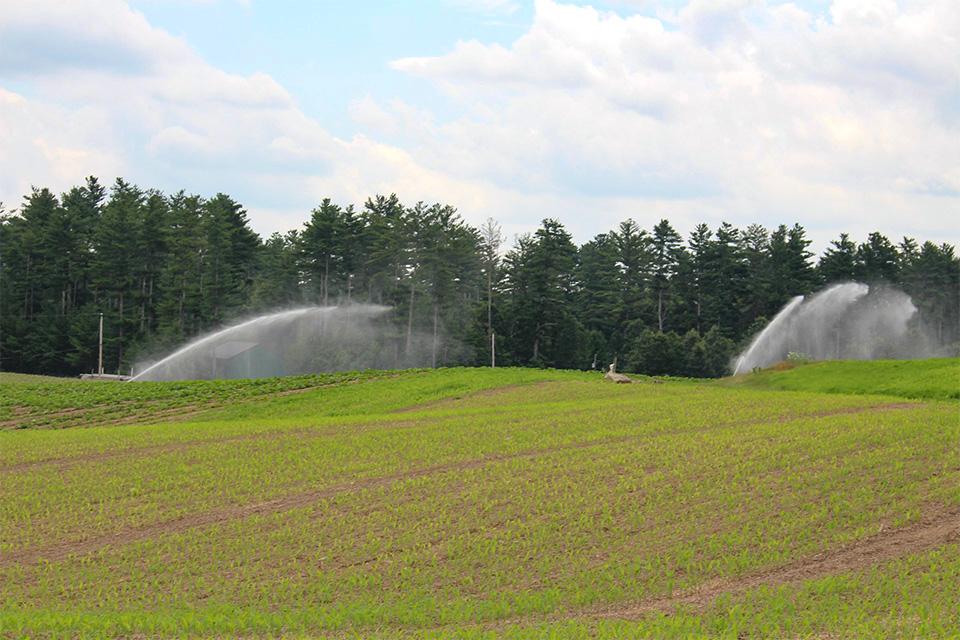
Overhead irrigation is used strategically where it best fits crop and timing needs.
Photo: Brookdale Fruit Farm
Looking Ahead
Hardy sees irrigation continuing to evolve toward better measurement, simpler systems, and more integrated data, especially as labor remains tight.
“You can’t improve what you can’t measure,” he says. “But the tools have to be usable. If they’re too complex, they won’t stick.”
For now, his advice to growers remains practical.
“Start with systems that work,” Hardy says. “Make them simple, make them repeatable, and build from there.”
 At a Glance: Brookdale Fruit Farm
Founded: 1847
Location: Hollis, NH
Generations: Seventh generation
Ownership: Hardy family
Vegetable acreage: 450+ acres
Primary crops: Sweet corn, cucurbits, tomatoes, peppers, berries, apples, peaches
Markets: Retail farm stand, pick-your-own, wholesale and direct store delivery
Subscribe Today For
