


Key Factors Reshaping the World of Tomato Breeding Now
 February 10, 2026
 All farming is local, but tomato breeding rarely is. Seed companies must account for how humidity and mild winters in Georgia shape disease pressure, while also developing varieties suited for short-season regions like Minnesota and high-intensity production systems in California. Add in diverse markets and evolving consumer preferences, and regional nuance becomes critical.
We spoke with seed companies working across these environments to understand how familiar challenges — especially disease pressure — are becoming more complex as regional differences, pathogen races, and trialing strategies increasingly shape the tomato varieties growers buy today.
Disease Pressure Still Drives Regional Decisions — but With More Nuance
While seed companies continue to prize disease resistance, it’s now more nuanced. What’s changing is how different disease pressure can play out from one region to the next, even when growers are dealing with the same named disease.
The breeding and product development teams at HM Clause emphasize that disease pressure remains a constant but its expression is highly regional.
“Across both the fresh market and processing tomato markets, disease pressure remains the primary driver influencing breeding priorities. But how those diseases manifest is closely tied to regional climate, production systems, and how conditions are evolving over time.”
At Bejo, that variability increasingly comes down to pathogen races — a distinction that can make or break a variety depending on where it’s grown.
“Disease pressure varies by region, and even the same disease can differ by race depending on where it occurs,” says Doug Heath, tomato breeder for Bejo USA & Canada.
That race-level nuance is forcing breeders to look beyond broad resistance claims and test how varieties hold up under specific regional conditions.
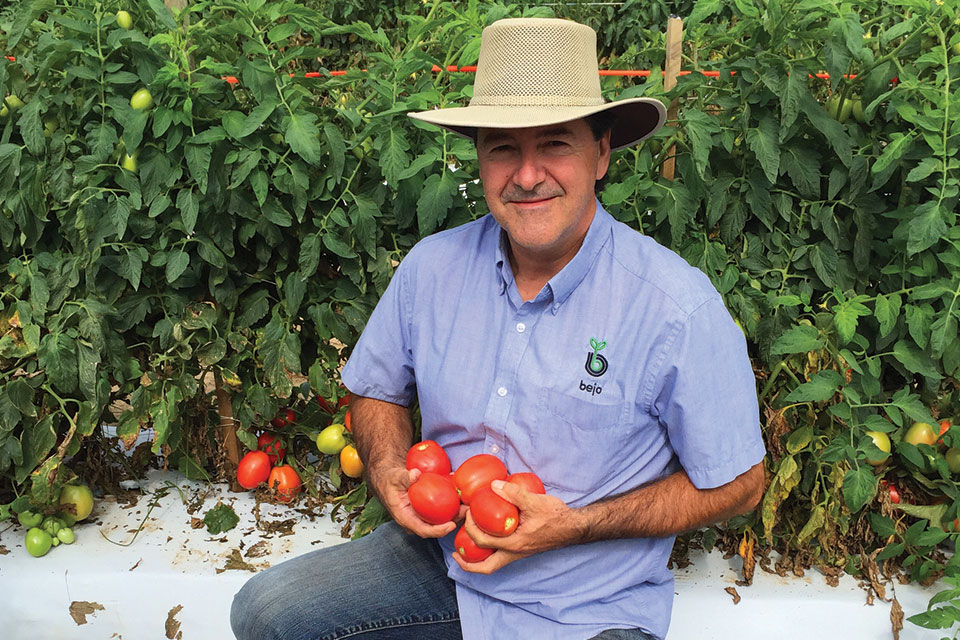
Bejo Seeds’ Senior Tomato Breeder Doug Heath
‘One-Size-Fits-All’ Is Fracturing — but Adaptability Still Matters
As regional disease profiles, climates, and markets diverge, the idea of a universal tomato variety is under pressure though wide adaptability still has value.
“Regional adaptation is a must, but releasing hybrids that perform well across multiple regions remains a goal,” Heath says. He points to Bejo’s fresh-market tomato variety ‘Patsy’ as an example of a hybrid bred for broad adaptation across the eastern U.S., combining disease resistance with consistent fruit quality.
HM Clause sees clear limits to stretching a single variety too far.
“A variety bred to thrive in a dry West Coast environment may not be the right fit for a humid East Coast field with different disease pressures and agronomic realities.”
The challenge, the company notes, is balancing adaptability with enough regional validation that growers can trust a variety that has been thoroughly vetted for their conditions.
Market preferences add another layer, according to Patty Buskirk, owner of Seeds by Design.
“Microclimates matter, but so do regional vegetable tastes. Pink tomatoes are popular in the Southeast, while orange-fruited types are more common in the Upper Midwest.”
While round red tomatoes still dominate price-driven fresh markets, Buskirk notes growing interest in flavor-forward and uniquely colored varieties, particularly in fresh-market niches.

Patty Buskirk, Seeds by Design
Trialing Moves Closer to the Field — and Becomes More Selective
To manage this complexity, seed companies are leaning more heavily on regionally distributed, on-farm trials as varieties near commercialization.
“Trialing has become more targeted and more regional, with increased emphasis on placing trials in growers’ fields,” HM Clause explains.
These trials are designed to expose advanced selections to the specific disease, climate, and management of pressures they are likely to face once released, helping companies decide which varieties move forward — and which do not.
Bejo follows a similar approach, making early breeding selections in consistent locations while evaluating finished hybrids across as many regions as possible before release.
Seeds by Design has long relied on localized grower trials, Buskirk notes, along with region-specific evaluations through programs such as All-America Selections, where varieties are judged based on performance in distinct geographic areas.
For growers, the takeaway is less about chasing novelty and more about understanding fit. Disease pressure may be a familiar driver, but differences in pathogen races, climate, and market expectations are making regional validation increasingly important. As breeders push trials closer to the field, future tomato variety releases are likely to reflect not just broad performance claims, but how varieties perform under the specific conditions growers face season after season.
Subscribe Today For
