



Focusing On the Top Pests for Fruit Growers Right Now
Growers of all fruit crops answered the 2025 State of the Fruit and Nut Industry Survey question: What pests were particularly problematic in 2024? Here are the top responses for all four pest categories (insects, diseases, wildlife, and weeds).
DISEASES
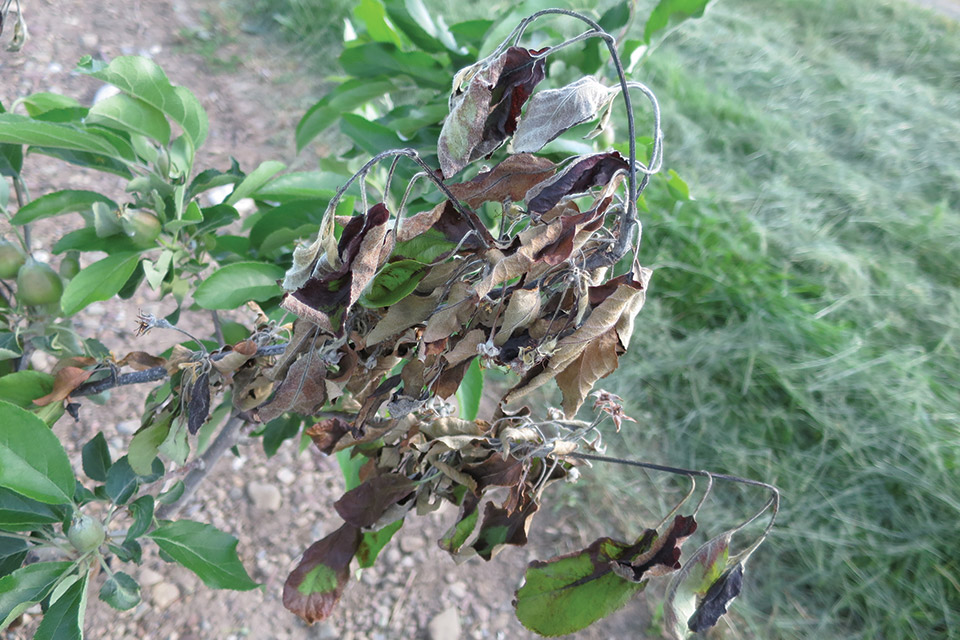
A typical shepherd’s crook is shown on this apple shoot with fire blight. (Photo: Kerik Cox)
Pome Fruit
1. Fire blight
2. Apple scab
3. Bitter rot (Glomerella leaf spot)
4. Bitter pit
5. Cedar apple rust
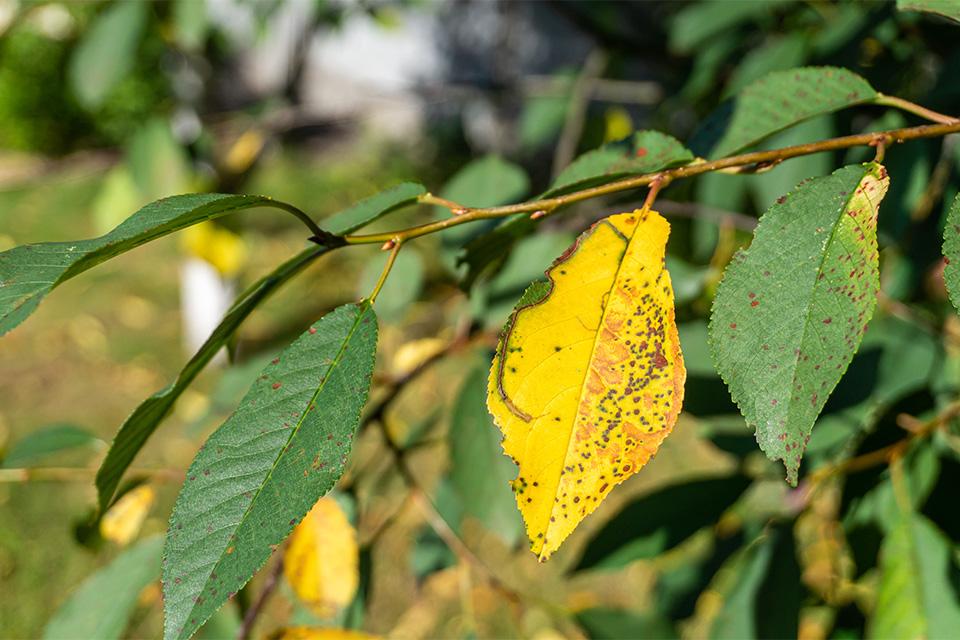
Symptoms of cherry leaf spot are extremely evident on this tree.
Photo courtesy of AdobeStock_salarko
Stone fruit
2. Brown rot
3. Little cherry virus
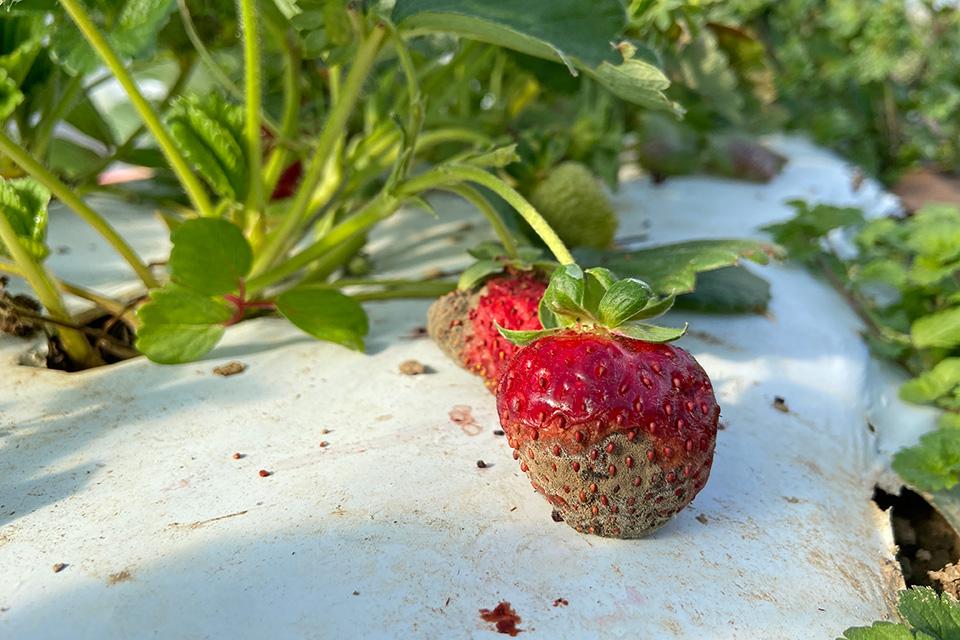
Anthracnose symptoms on strawberries.
Photo by Kerik Cox
Berries
1. Anthracnose
2. Botrytis
3. Neo-P
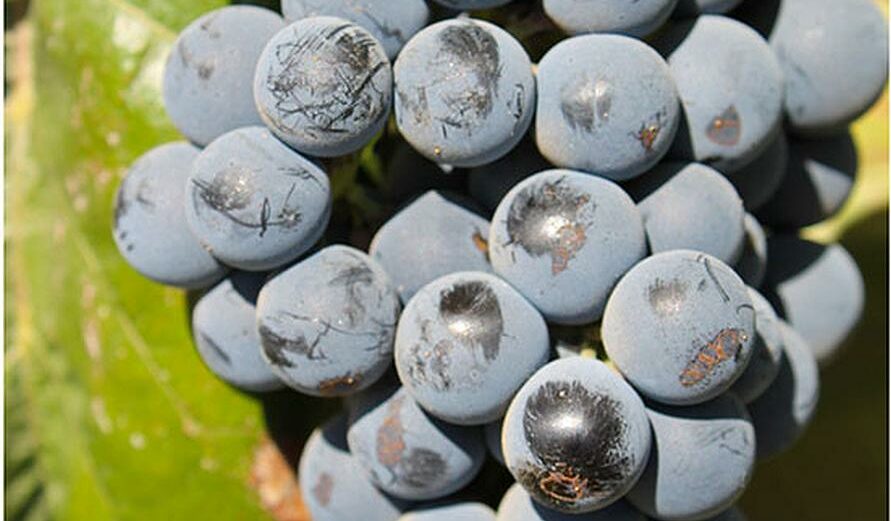
There has been an increase in the use of low active-ingredient coppers for control of powdery mildew in grapes, such as this bunch of ‘Alicante’.
Photo by David Eddy
Grapes
Nuts
1. Pecan scab
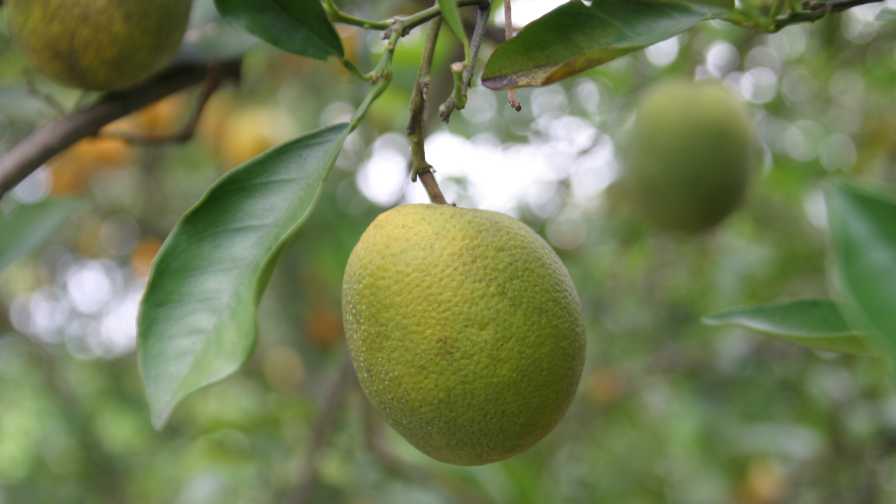
The fruit on this tree is showing the effects of citrus greening. Scientists are looking into plant hormone therapy as a possible solution.
Photo courtesy of UF/IFAS
Citrus
INSECTS
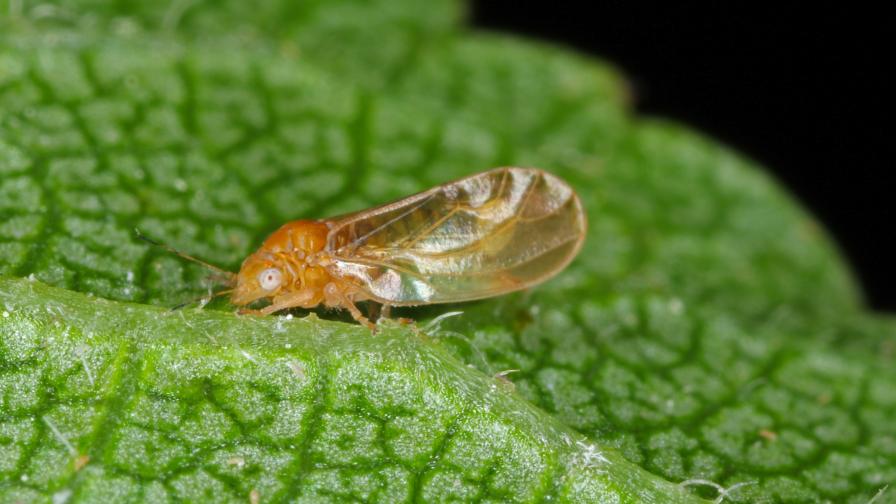
Closeup of pear psylla.
Photo: Tomasz – stock.adobe.com
Pome Fruit
1. Codling moth
2. San Jose scale
3. Japanese beetle
4. Pear psylla
5. Plum curculio
6. Wooly apple aphid
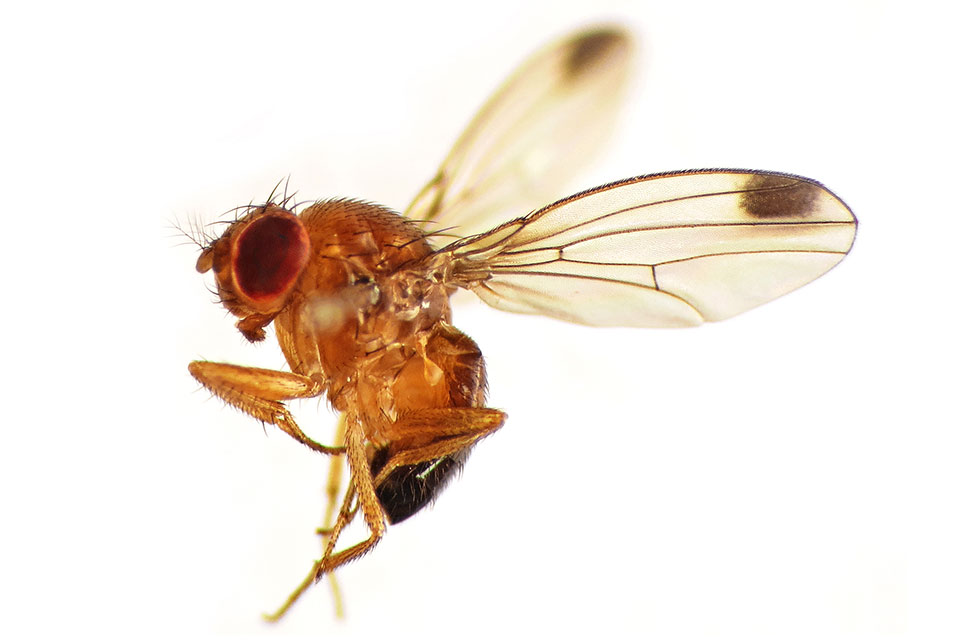
Spotted wing drosophila (Photo: Martin Cooper)
Stone fruit
2. Aphid
3. Codling moth
4. Stink bug
Berries
1. Spotted wing drosophila
2. Japanese beetle
3. Aphid
4. Spider mite
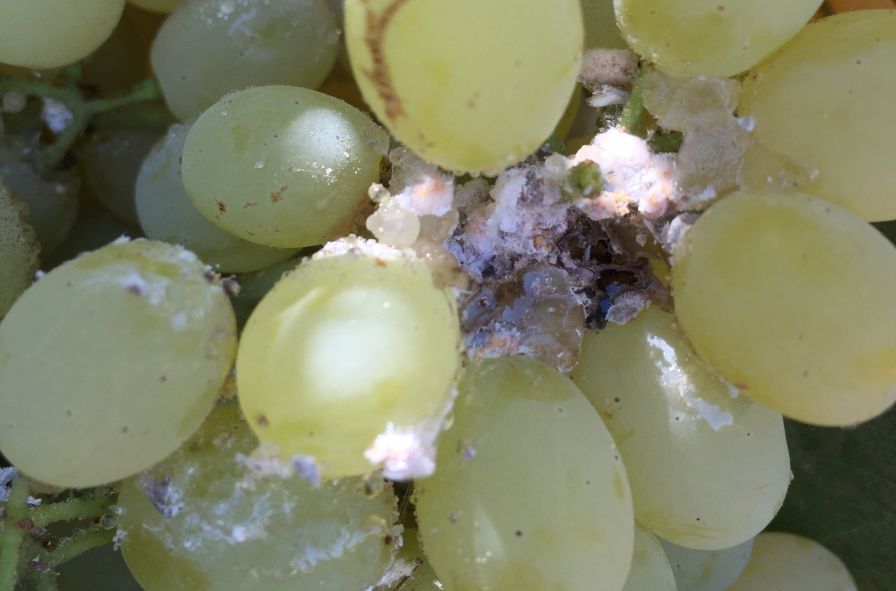
Vine mealybug feeds on this grape cluster. (Photo: George Zhuang)
Grapes
1. Aphid
3. Grape leafhopper
4. Mite
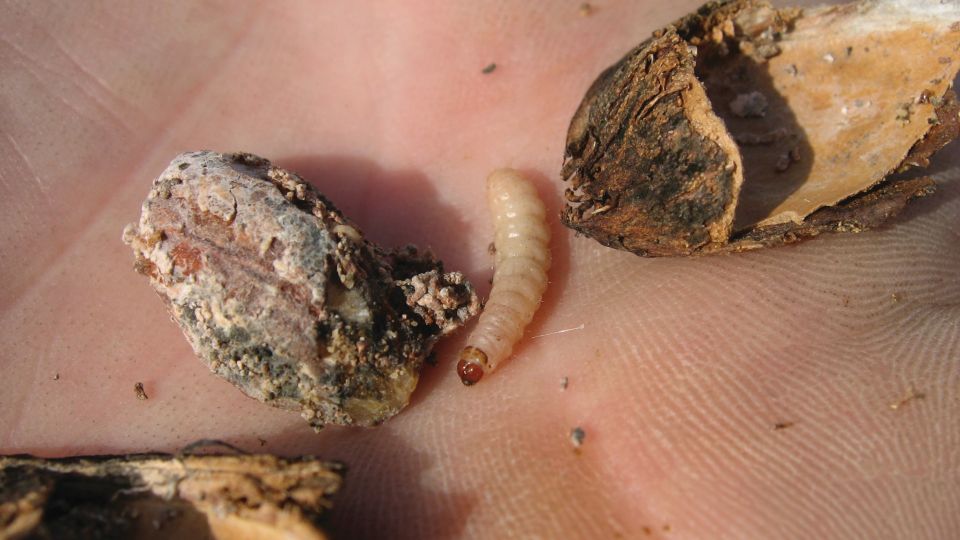
Navel orangeworm larvae is shown from a mummy cracked open. (Photo: Franz Niederholzer)
Nuts
1. Mites
3. Walnut husk fly
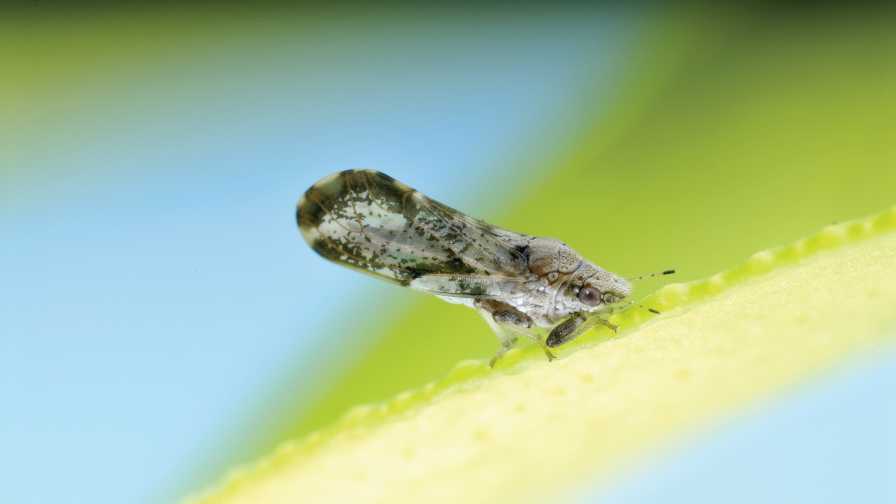
An extreme close-up of HLB’s vector, the Asian citrus psyllid.
Photo by Jeffrey W. Lotz
Citrus
WILDLIFE
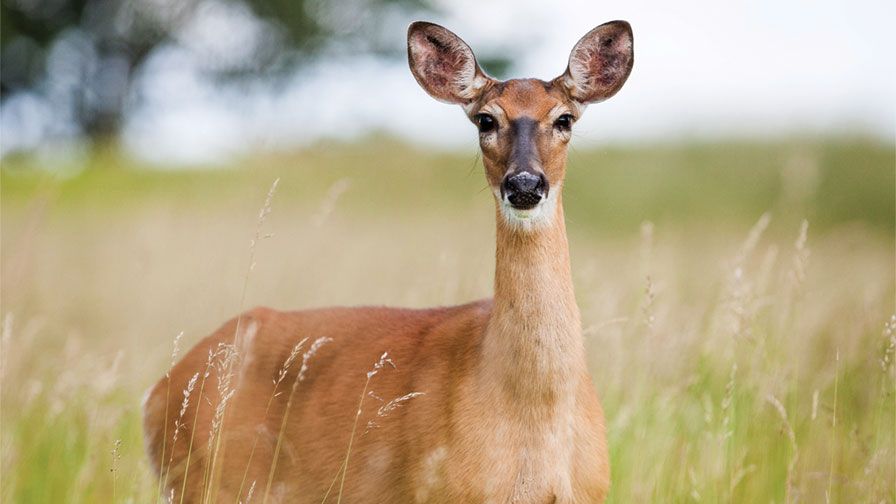 Pome fruit
1. Deer
2. Bird
3. Vole
4. Mice
5. Ground squirrel
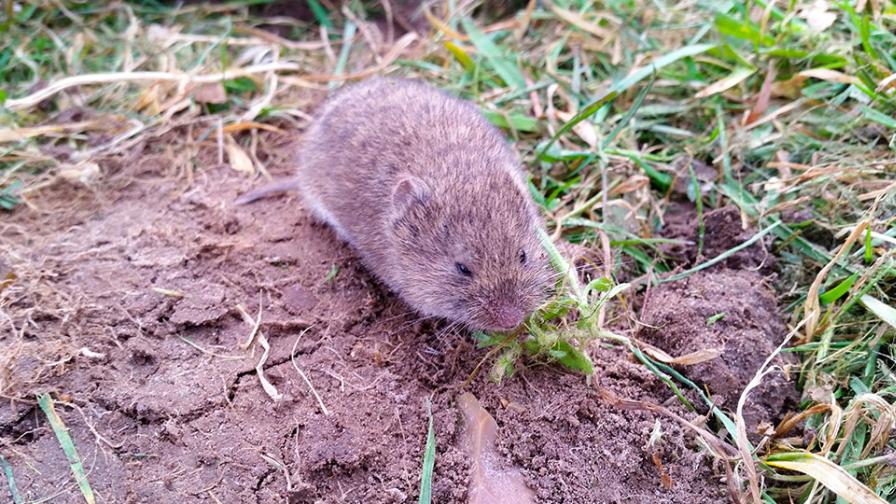
Growers may soon have approval to use a post-ingestive repellent to limit voles.
Stone fruit
1. Deer
2. Gopher
3. Bird
4. Vole
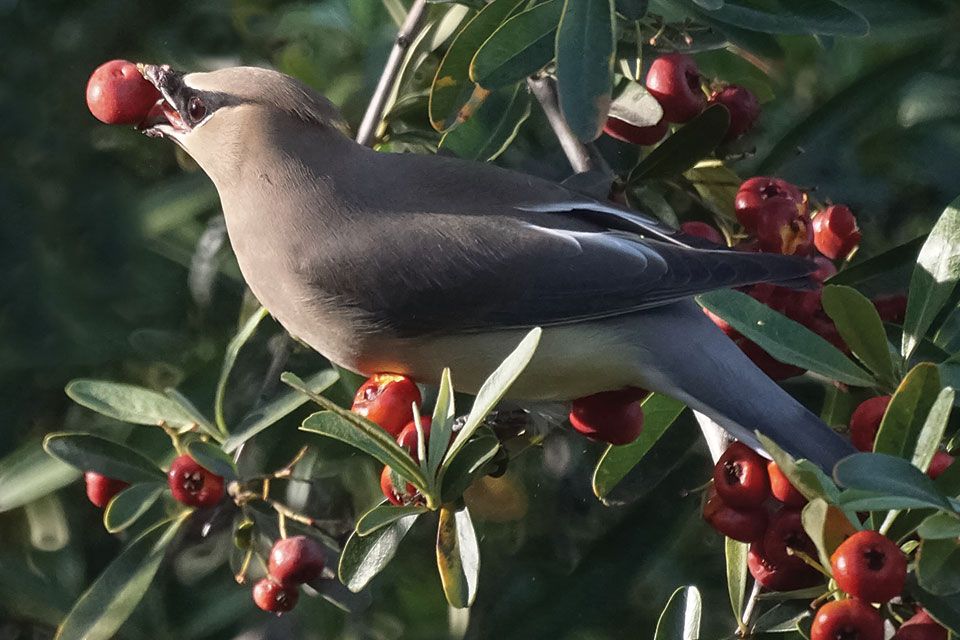
Cedar waxwings can be problematic for berry growers.
(Photo: Mike’s Birds)
Berries
1. Bird
2. Deer
3. Vole
4. Rabbit
Grapes
1. Deer
2. Bird
3. Ground squirrel
4. Rabbit
5. Gopher
Nuts
1. Gopher
2. Ground squirrel
Citrus
1. Ground squirrel
WEEDS (All Six Crops Combined)
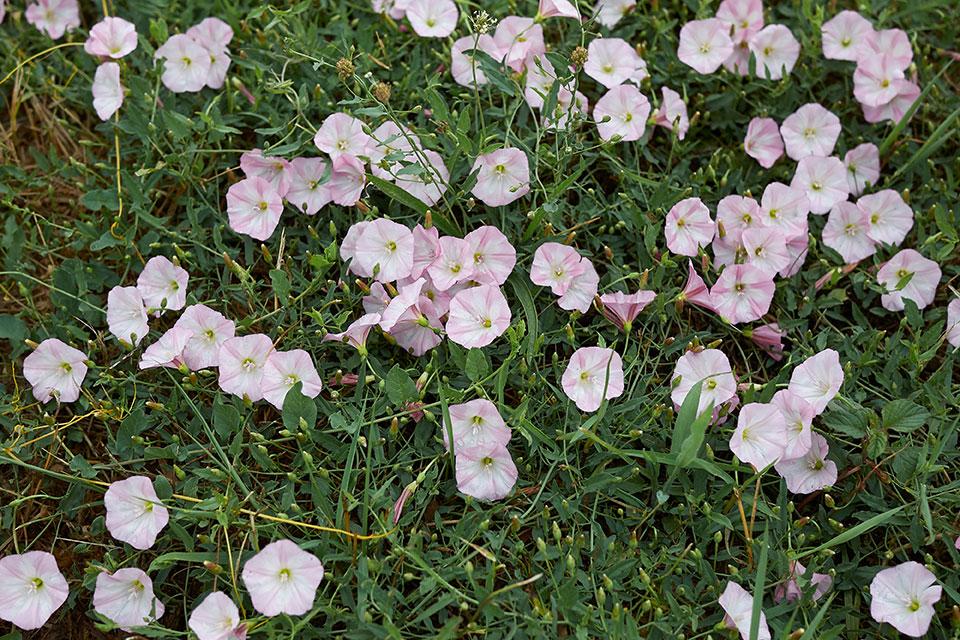
Bindweed Photo: Simona – stock.adobe.com
1. Grasses
2. Bindweed
3. Marestail
4. Nutsedge
5. Thistle
6. Foxtail
7. Pigweed
Click here to check out more insights from the 2025 State of the Fruit and Nut Industry report.
Subscribe Today For
