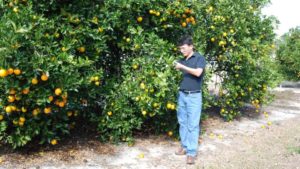
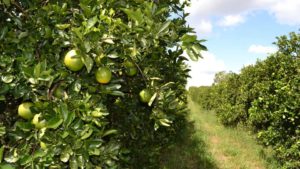
Responding to a disease like citrus greening might feel futile, but there are examples of growers who are finding viable solutions to keep going.
New expansions of citrus greening quarantine areas in California impacting hundreds of acres of commercial citrus.
Government agency grants unconditional registration to a novel HLB treatment based on a naturally occurring antimicrobial peptides from spinach.
California Department of Food and Agriculture confirms first HLB detection in Imperial County along the border in Calexico.
USDA-APHIS is expanding the area quarantined for citrus greening in parts of southern California. Find out which counties are affected.
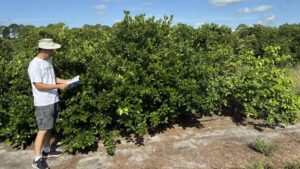
Harvest has begun in the Millennium Block, a seven-year, 5,000-tree research project designed to identify HLB-tolerant citrus varieties and rootstocks.
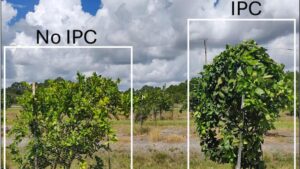
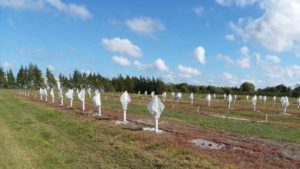
University of Florida researchers are using a combination of individual protective covers and plant growth regulators to help trees survive deadly disease.
USDA-APHIS is taking action because of citrus greening detections in plant tissue samples collected in Riverside and Orange counties.
University of Florida researchers are joining forces to wage a high-tech war against plant pests and diseases with citrus greening as top priority.
UF/IFAS researchers have developed a plant they’re calling NuCitrus. It’s based on a protein that can help make some fruit more tolerant to citrus greening.

USDA’s National Institute of Food and Agriculture invests nearly $23 million as part of Emergency Citrus Disease Research & Extension program.
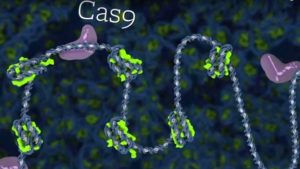
Despite the potential of CRISPR playing a role to solve the citrus greening riddle, consumer perception of genetic editing remains a hurdle.
Researchers explore breakthrough to help thwart citrus greening’s vector via biotechnology.
High-tech tools in plant genetics helping researchers get closer to he first commercial releases of orange-like hybrids with HLB tolerance.
A trio of grants totaling more than $11 million helping scientists focus on instilling disease tolerance below ground and above ground.
What started out as a novel experiment to help protect young trees from the Asian citrus psyllid is proving fruitful.
Among top goals for the new research center is to find citrus varieties that can tolerate or even resist citrus greening disease.
$5 million in funding from USDA to help fuel latest efforts to thwart devastating citrus disease and its vector.
USDA’s initial citrus crop estimates indicate another season of well below-normal output; but there is some hope.