



New Pest Warning for Florida Farmers: Watch Out for Two-Spot Cotton Leafhopper
 September 16, 2025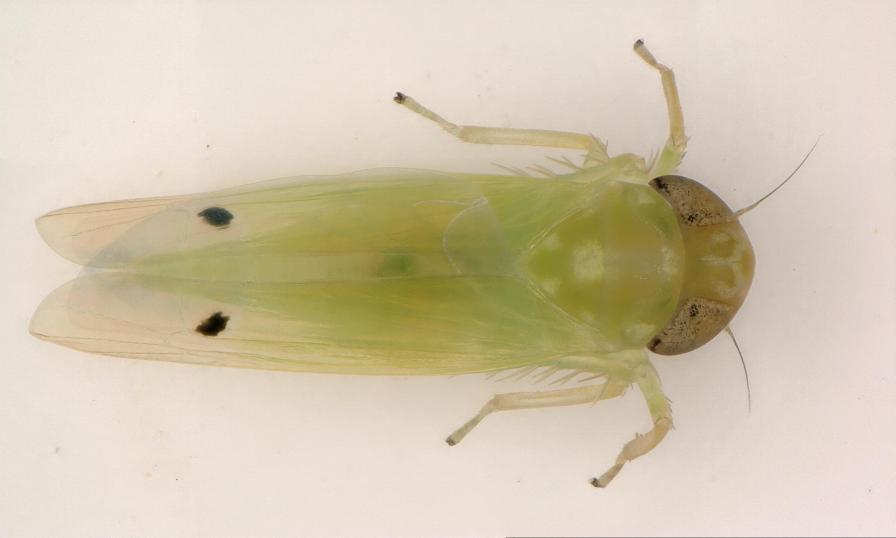
Dorsal view of a male two-spot cotton leafhopper. This emerging invasive pest is of growing concern for Florida farmers.
Photo by Alexandra Revynthi
There’s another invasive pest Florida growers can add to their ‘most wanted’ list of insects. University of Florida researchers are alerting growers to a new pest of concern making its mark in South Florida farms and nurseries — the two-spot cotton leafhopper.
Measuring only 2.5 millimeters to 3 millimeters in its adult stage, the two-spot cotton leafhopper can cause serious damage to food and ornamental crops, and UF/IFAS scientists are encouraging vigilance.
“The two-spot cotton leafhopper is a serious pest of cotton, okra, eggplant, peanut, roselle, soybean, sunflower, and tropical hibiscus,” says Alexandra Revynthi, Assistant Professor of ornamental entomology and acarology at the UF/IFAS Tropical Research and Education Center in Homestead. “For South Florida, this is bad news as okra and tropical hibiscus are important and popular crops for the region.”
First detected in Florida in December 2024 by the Florida Department of Agriculture and Consumer Services (FDACS), the tiny destructive insect feeds on plant sap, causing yellowing, browning, curling and wilting of leaves – a symptom known as hopperburn.
Because the insects are so small, the damage often appears before farmers even notice the pest. In crops overseas, infestations have caused yield losses of more than 50% by the pest that goes by other names including Indian cotton jassid, Indian cotton leafhopper, and cotton jassid.
While South Florida growers may see the greatest impact on crops like okra, eggplant, roselle and tropical hibiscus, the pest’s reach extends statewide.
FDACS’ Division of Plant Industry has listed the two-spot cotton leafhopper as a regulated pest. So far, detections have been confirmed in several counties across the state, with the potential to spread further.
For more information, visit fdacs.gov.
Subscribe Today For
