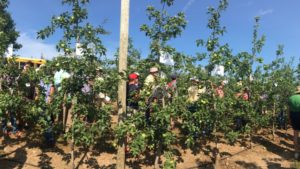
The Good and Bad for Washington State Apple Growers By David Eddy|January 2, 2024 Local producers scramble for profits in wake of boon crop. Find out what was said during the Washington State Tree Fruit Association annual meeting.Read More
Hot Take on Cyclospora and the Weakening of Food Safety Surveillance By Western Growers|July 16, 2026
Under Pressure: Ways Vegetable Growers Are Dealing With Mounting Challenges By Carol Miller|July 15, 2026
3 New Apple Rootstocks To Be a Game-Changer for Growers By Cornell Chronicle|December 19, 2023 Already strong and still growing, Cornell’s Geneva Apple Rootstock program to cover the bases for all growers with trio of new releases.
New Studies Estimate Apples for Processing Production and Harvest Costs By UC Agriculture and Natural Resources News|December 4, 2023 Two new studies can help Central California Coast growers estimate costs and potential returns for organic and conventional apples for processing.
The Key To Bitter Pit in Apples? Unlock The Calcium By Thomas Skernivitz|December 4, 2023 While there is no simple solution to improving uptake of the nutrient, ‘Honeycrisp’ growers have various options.
New and Juicy Fruit Varieties You Should Know and Grow Posted by Growing Produce Staff|November 14, 2023 Check out a few apple, grape, cherry, and berry selections from leading nurseries and fruit breeders.
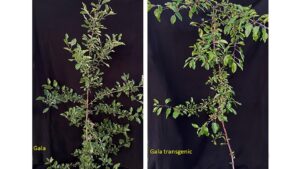
The Science Behind Why Weeping Growth in Apple Trees Defy Gravity By Kenong Xu|October 31, 2023 Study reveals the primary genetic cause of apple-growing enigma.
Report: Employment and Rising Costs Magnified in the Apple Orchard By Thomas Skernivitz|October 9, 2023 U.S. Apple Association addresses labor and inflation in its latest outlook report. Check out some notable remarks.
4 Fruit Varieties You Might Want To Add To Your Crop Portfolio By Growing Produce Staff|October 2, 2023 Check out a few apple and blueberry selections from leading nurseries and fruit breeders.
Big ‘Kudos’ to the Newest Apple Variety from the University of Minnesota Posted by Growing Produce Staff|September 21, 2023 Fruit breeding program announces its 29th apple release: the MN33 variety, which will be sold under the brand name ‘Kudos’.
Understanding the Science: More Produce Consumers Getting On Board With CRISPR By Kenong Xu|September 18, 2023 Studies reveal consumers’ views on gene-edited fruits.
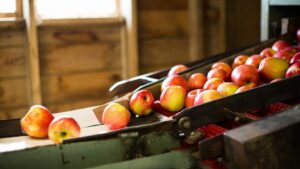
Apple Industry Expects 4.1% Production Jump in 2023-2024 By Thomas Skernivitz|August 21, 2023 However, projected total of 256.3 million bushels would be down 1% over five-year average.
What’s the Next New Apple to Know? Try a Honeycrisp and Cripps Pink Hybrid By Washington State University College of Agricultural, Human, and Natural Resource Sciences|August 16, 2023 Featuring a pink blush over a yellow background, ‘WA 64’ combines qualities of two popular selections for a firm, sweet, and tart bite.
Washington Apple Harvest Forecast: The New Normal Posted by David Eddy|August 9, 2023 This year’s crop is expected to rebound from the small 2022 crop by nearly 30%.
Big Breakthrough When It Comes To Bitter Pit and ‘Honeycrisp’ Apples By Thomas Skernivitz|August 8, 2023 Study indicates rootstocks matter — some more than others, like B.10 rootstock — in the control of troublesome disorder.
Want Apple Trees That ‘Weep’? Gene Variation Found That Could Improve Orchards By Cornell Chronicle|July 31, 2023 Studies have shown ‘weeping’ architecture — branches growing downward — helps allocate more resources and other nutrients toward reproductive growth.
A Tribute To Apples — The All-American Fruit — And Those That Grow Them By David Eddy|July 25, 2023 Though popular in many parts of the world, apples hold a special place in the hearts of Americans.
How the ‘Cosmic Crisp’ Apple Is Still Striking a Nerve With Growers By David Eddy|July 11, 2023 The millions of ‘trees planted in Washington over the past several years are not viewed favorably by other growers around the country.
Watch This! Tractor Mounted Sensor Powered by AI for Precision Orchard Management Posted by Growing Produce Staff|July 7, 2023 Check out TMS TreeScout, a fully integrated high-precision sensor technology launched by Aurea Imaging that helps fruit farmers optimize orchards.
Tackling New Technology Part of the Territory for Pome Fruit Growers Today By Thomas Skernivitz|June 25, 2023 Producers relate their experiences with new precision crop load management tools.
Say Hello To ‘EverCrisp’ 2.0 – A Real Looker of an Apple Posted by David Eddy|May 9, 2023 Popular variety’s successor, ‘MAIA-Mitchell’, has all the pluses – but makes its appearance eight weeks earlier in “chili-red” color.