



Smart Tech
What’s Powering Trattore Farms to Grow Better Than Ever
 December 2, 2025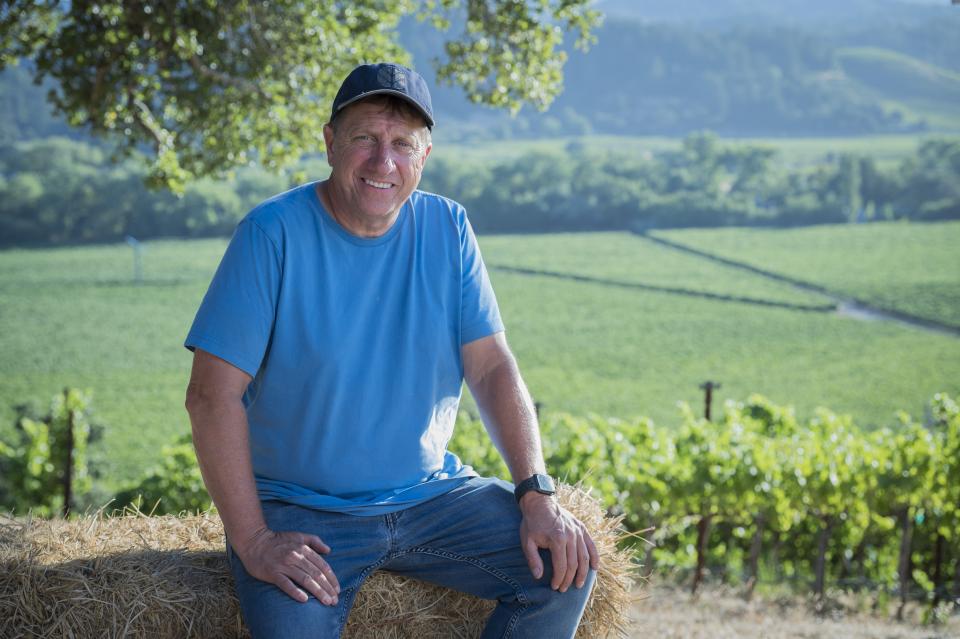
Tim Bucher of Trattore Farms doesn’t quite fit the traditional mold: He started his farm at age 16 and then transformed his concerns about labor, regulation, and cost into a tech startup that drives automation in specialty crops.
Photo courtesy of Trattore Farms/Agtonomy
At dawn in the Dry Creek Valley of Sonoma County, CA, the hilltop rows of vines at Trattore Farms stretch toward Geyser Peak and Mount St. Helena. On each slope, vines grow in stone-strewn soils, cooled by Pacific breezes, nurtured by hands and machines alike. The farmer behind it all, Tim Bucher, doesn’t quite fit the traditional mold: he started his farm at age 16, grows olives and grapes in a vertically integrated model, and then transformed his concerns about labor, regulation, and cost into a tech startup driving automation in specialty crops.
Farming by Hand, Vision in Mind
“My older brother took over the family dairy farm, but I bought my first vineyard at 16,” Bucher recalls. “By the time I was in high school I was farming full-time, calling the land Trattore Farms, which is ‘tractor’ in Italian, because I loved machines.” He planted olive trees and vines, built an olive mill and winery, and believed deeply in vertical integration: owning the land, the oil, and the bottle.
But the business was changing. Profit margins compressed, and expenses soared. “Labor was 50% of my expenses and rising,” Bucher notes. “And overtime regulations kept tightening; first 12 hours, then 10, then eight. When you’re harvesting grapes or olives during weather fronts, you can’t lock the office at five o’clock.”
Thirty-five vineyard acres in Dry Creek Valley, 11 varietals grown in individually managed blocks — all testify to his focus on craft and control. Yet the underlying pressure was unmistakable: the farm that once paid the bills now demanded smarter tools.
From Farmer to Farmer-Engineer
The turning point came at UC Davis. “I accidentally registered for a computer course in a 500-student auditorium. I went in a farmer, took this class, and it changed my life,” he credits the class. “By the end of the semester, I was teaching the class, and it scared me, because all I knew was farming.”
He came out of UC Davis as a farmer and an engineer, and moved on to graduate work at Stanford University, where he spent years alternating between his Sonoma farm and Silicon Valley. That dual identity, farmer and engineer, gave Bucher what he calls “a big unfair advantage.”
“When I built automation on the vineyard, I knew what farmers care about,” he says. “Not just the tractor going from A to B; I cared that the spray went on, that no vine was damaged, that I wasn’t building a toy.”
Back on Trattore Farms, Bucher had already installed remote-controlled irrigation, fermentation tanks he could monitor via phone, and a water-recycling plant for his olive oil press. But the field work — the mowing, spraying, thinning, row pass after row pass in 110-degree heat — remained dependent on labor he couldn’t always secure.
Birth of an Autonomous Tractor
“Soon I realized the only thing I hadn’t automated was the tractor in the vineyard,” Bucher says. He and some friends stripped the engine from a diesel machine, installed electric motors, mounted eight cameras, safety sensors and computers, then created what he calls his first autonomous tractor.
“I started showing it to my Silicon Valley friends and said ‘Hey, look at what we’re doing to save Trattore.’ She looked at me and said ‘Tim, you’re an idiot. This isn’t about just saving Trattore, this is about saving the world. Let’s go start a company.’ That’s how Agtonomy was born.” Today, Agtonomy is a software and AI services company specializing in automation and physical AI solutions for agriculture and land management. The company develops a hybrid autonomy and tele-assist platform that transforms standard industrial equipment, like tractors, into autonomous and remote-controlled machinery through partnerships with leading original equipment manufacturers (OEMs). This technology was recently on display at FIRA USA 2025 in Woodland, CA.
From his own rows of grapes and olives he moved to software for others. His prototype runs among permanent crops, the very plants most costly to damage and hardest to mechanize. He noted that in a vineyard, a single vine can be worth thousands of dollars, so even a minor mistake that damages one can be a costly loss.
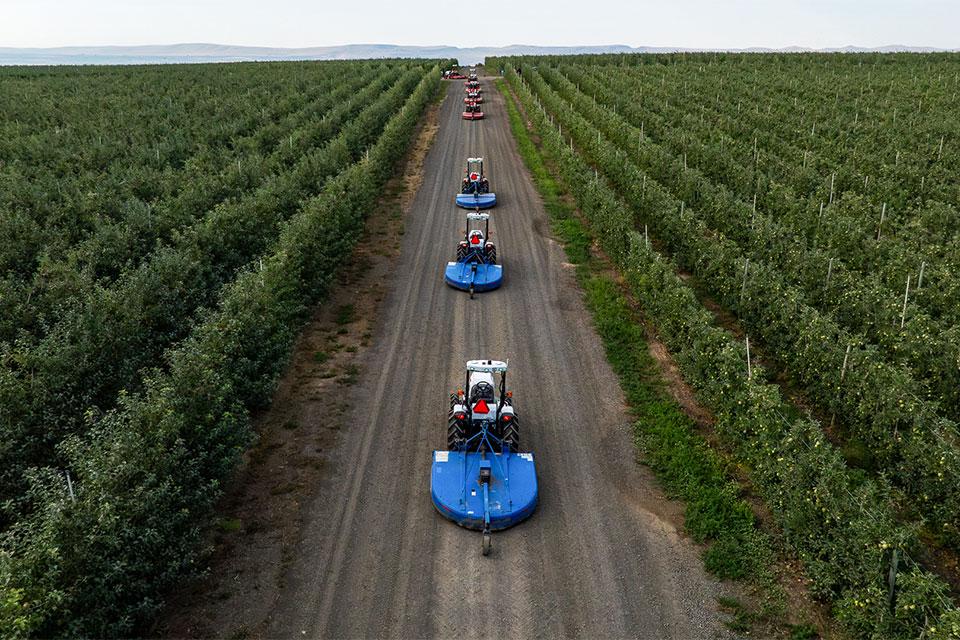
In a world where growers receive the lowest share of the food-dollar in decades and labor shortages bite hardest on permanent crops, his vision is rooted in both soil and software.
Photo courtesy of Trattore Farms/Agtonomy
Field-Ready Innovation for Permanent Crops
The vines at Trattore Farms supply wine production, and the olive trees, vintage varietals grown on 20 acres, feed a dual olive-oil and vinegar line. Bucher’s estate emphasizes hand harvesting, micro-picks, and field-blending of Rhône varietals, yet it also shows the convergence of craft and automation.
“Permanent-crop labor is repeatable work, such as mowing, spraying, and thinning, but you’re in trees and vines, slopes and rocks,” he explains. “To automate that you need cameras, vision, computing and safety. That’s physical AI.”
His company embeds software into equipment from trusted OEMs rather than building tractors from scratch, so growers get automation within a proven service network. The aim: retrofit existing machines, keep dealers and service intact, and act quickly.
Farming Today, Technology Tomorrow
Back in his tasting room, Bucher welcomes visitors to Trattore Farms’ “Get Your Boots Dirty” tour. Guests walk the olive mill, vineyard and winery, and taste wines made from his steep slopes and complex soils. But behind the scenes, he’s still solving problems. Rising input costs, regulations, labor scarcity: all remain urgent.
“We didn’t build this to replace farmers,” he states. “We built it so they can afford to farm.” In a world where growers receive the lowest share of the food-dollar in decades and labor shortages bite hardest on permanent crops, his vision is rooted in both soil and software.
At Trattore Farms the vines and trees grow in the same ground that is quietly teaching the next generation of autonomous machines. And when the tractor glides, camera-lit, among the rows, it is guided by a man who never stopped being a farmer first.
Farm Facts: A quick look at the operation behind the story
Trattore Farms
Founded: 1999
Owner: Tim Bucher
Location: Geyserville, CA
Size: 40 acres
Crops: Vineyards and olive trees
Sustainability: The farm incorporates sustainable practices, including a water recycling plant that treats production water for irrigation and a compost center to build soil nutrients. The owners use technology to control aspects of the farm remotely, from irrigation to fermentation tanks.
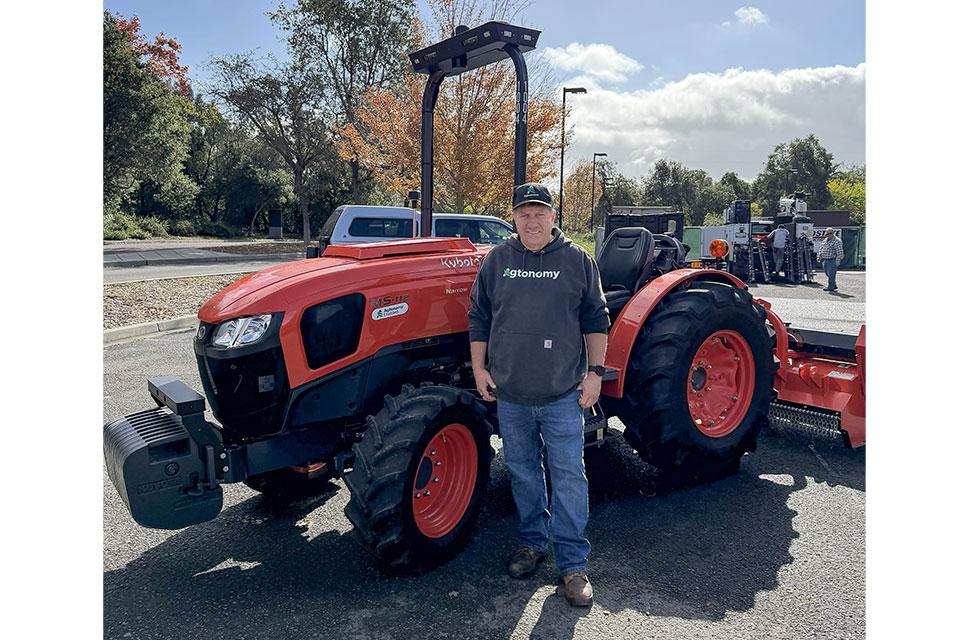
Photo courtesy of Trattore Farms/Agtonomy
The Technology Powering Modern Precision Agriculture
Precision agriculture leverages advanced technologies to revolutionize how farmers manage their crops, especially those that are high-value and require careful, individualized care. Today’s smart farm machinery is equipped with a network of integrated sensors, cameras, and increasingly affordable LiDAR systems, providing real-time data from the field. These instruments work together to enable inch-level guidance, an essential advancement when tending plants that represent years of growth and significant investment.
At the heart of modern precision farming is artificial intelligence (AI). These systems interpret the flood of sensor data, allowing autonomous tractors and implements to make split-second decisions, such as adjusting routes to avoid delicate crops, optimizing spraying or mowing patterns, and detecting obstacles in the path. Uniquely, some platforms continuously learn from their environment, recognizing everything from field boundaries to subtle hazards like spider webs. This real-time adaptation not only improves operational efficiency and consistency, but also dramatically enhances safety for farm workers by reducing their exposure to hazardous or repetitive tasks.
The result: a new era of sustainable agriculture where technology empowers growers to care for their land with increased accuracy, fewer inputs, and greater peace of mind.

For more Smart Tech topics, click here.
Subscribe Today For
