



Smart Tech
How AI Can Work To Solve Labor Challenge for Fruit Growers
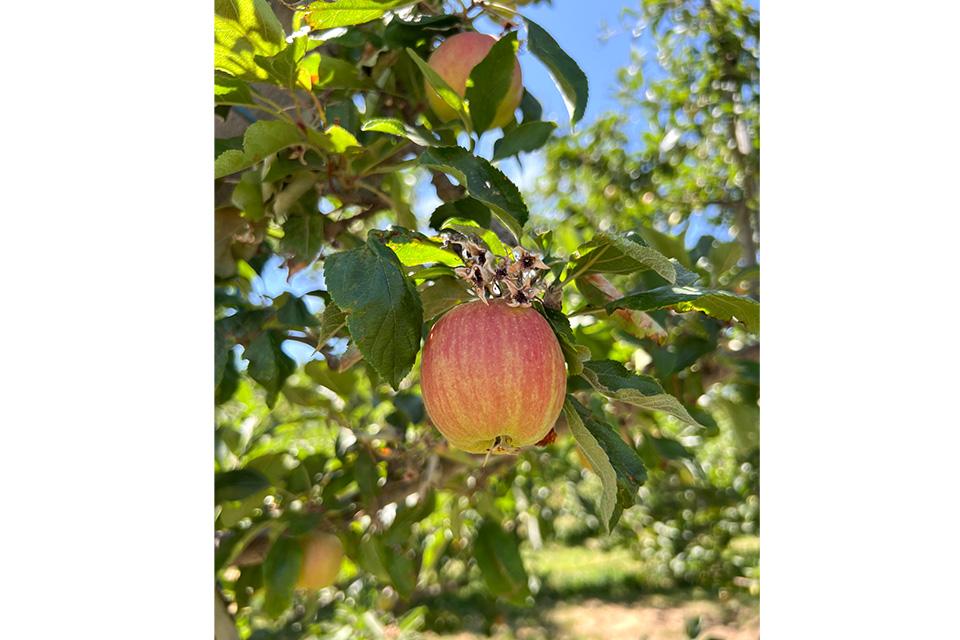
AgriMACS, a consulting company focused on tree fruit operations, is now using AI to fill labor gaps in its back office processes.
Photo: AgriMACS
Agriculture is experiencing its worst labor shortage in a decade, with ag employment falling by 155,000 workers since March, according to the U.S. Bureau of Labor Statistics.

Staffing shortfalls are not limited to the field, observers say. Rural communities are struggling to find qualified support staff for back-office work as well — an “invisible” issue that’s no less damaging to daily operations.
“When people think of ag, they picture orchards and tractors,” says Kristin Frankel, a controller at AgriMACS, a consulting company focused on tree fruit and viticulture operations across Washington state. “They’re not thinking about invoices and payroll systems, which don’t get the same visibility as field work but are just as important. Without a strong administrative system, even the best orchards would struggle.”
AgriMACS recently experienced this problem in its accounts payable department, where seasonal invoice spikes overwhelmed a small support team. Officials used artificial intelligence to solve the paperwork bottleneck, deploying a program that coded invoices and routed approvals with speed and accuracy. The change eased the administrative load, allowing staff to concentrate on more vital work.
“We had turnover at a time when workloads were really heavy, which exposed the limitations of our manual process,” Frankel says. “We were spending more time managing paper flow than problem-solving, so we couldn’t just hire our way out of the situation. We needed a smarter and more scalable solution.”
AgriMACS implemented Stampli, a cloud-based system that automates the more tedious aspects of the invoice lifecycle. Powered by the “Billy the Bot” AI copilot, Stampli handles everything from data entry to approval routing. The technology also flags duplicate invoices while checking for discrepancies between payments and purchase orders.
Since its implementation in 2022, “Billy” has proven a reliable teammate, finishing hours of manual data entry in mere minutes, Frankel notes.
“It completely transformed our workload,” she says. “Instead of spending time typing or double-checking invoices, we now approve what Billy has processed for us. Then we can reallocate staff to higher-value tasks like analyzing orchard costs and improving internal controls.
Stampli is not meant to replace humans, a common concern among AI naysayers, not to mention the agriculture industry has been historically reluctant to adopt new technologies. Instead, AgriMACS views the software as a tool, with Stampli staff providing the necessary training to employees, says Frankel.
Although AI excels at processing information, it lacks the ability to grasp context with the same keenness as the human mind, she adds.
“It’s not going to know why a number looks off, or what’s behind a grower’s unique situation,” Frankel says. “That’s where human experience and intuition matter, so let’s make sure every automation process has that human checkpoint. AI supports our people; it does not replace them.”
Given the difficulty of hiring admin staff in remote north central Washington, AgriMACS will continue to explore the use of AI. Headquartered in Chelan, the company is a two-hour drive from Seattle and Spokane, which makes finding an accounting professional challenging.
Although remote work may one day be an option, AgriMACS is currently focused on integrating AI technology into payroll, compliance, and data reporting — all without cutting staff.
“We’re not looking to eliminate people, because you always need the human touch,” Frankel says. “It’s about strengthening the team and freeing up work that requires human insight and judgment. AI is a valuable tool.”

For more Smart Tech topics, click here.
Subscribe Today For
