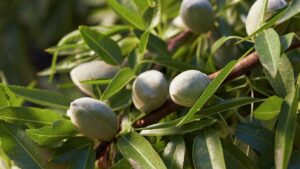
New Pest Found Infesting California Almond And Pistachio Crops By UC Agriculture and Natural Resources News|November 3, 2023 Researchers say crop sanitation will be key to controlling the invasive carpophilus beetle.Read More
U.S. EPA Gives OK to New Hybrid Solution for Soil Insects and Nematodes Posted by Growing Produce Staff|November 14, 2026
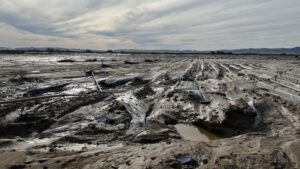
Florida Farmers Still Holding Their Breath in the Wake of Epic Flood Event By Paul Rusnak|November 13, 2026
Western Growers’ Leader Tasks Elected Officials to Focus on Economic Realities By Western Growers|November 13, 2026
Climate Change Could Spark Surge in Pests That Target Key Fruit and Nut Crops By UC Agriculture and Natural Resources News|October 30, 2023 California growers beware. Newly published study expects three major pests — codling moth, peach twig borer, and Oriental fruit moth — to rise up.
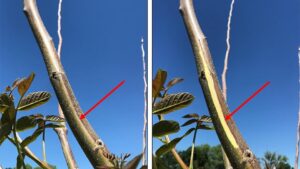
5 Steps To Protect Your Walnut Trees Before the Temperatures Plummet By Luke Milliron|October 30, 2023 Learn tips to minimize potential sudden autumn freeze damage, which has hit walnuts hard in recent years.
Pecan Growers in the Southern Plains Looking at Robust Harvest Season By Oklahoma State University Extension|October 26, 2023 National Pecan Shellers Association predicts this year’s crop estimate for Oklahoma at 22 million pounds.
Optimistic Outlook for Quality and Pricing of California Walnuts By Walnut Bargaining Association|October 19, 2023 Each year, the Walnut Bargaining Association issues a minimum price recommendation based on current crop and economic conditions.
Why Compromise Should Not Be a Dirty Word for Farmers By David Eddy|September 26, 2023 American Fruit Grower Editor David Eddy says talking tough is all well and good, but the goal is to get things done.
Southeast Georgia Growers Share Details in Aftermath of Hurricane Idalia By Georgia Farm Bureau|September 20, 2023 Multiple farmers across the storm’s path provide account to get an idea of the true impacts Idalia had on the state’s ag sector.
Ag Case Studies Break New Ground on Benefits of Soil Biology Insights Posted by Growing Produce Staff|September 18, 2023 For a fifth-generation almond and walnut farmer from California, seeing is believing when digging deeper into the soil biology in his orchards.
Production Prospects Trending up for California Walnut Growers By California Walnut Board|September 8, 2023 The just-released 2023 walnut crop forecast from USDA is at 790,000 tons, up 5% from 2022.
California Nut Producers Seeing Water, Water Everywhere — For Now By David Eddy|July 24, 2023 Too bad more of the residue from California’s bountiful winter can’t be stored.
The Almond Board of California Set To Welcome Its Next CEO Posted by Growing Produce Staff|July 21, 2023 Clarice Turner brings global executive leadership experience in consumer products and food service.
The Top Crop Protection Issues Fruit and Nut Growers Are Dealing With Today By Thomas Skernivitz|July 3, 2023 Producers spent 2022 battling many nuisances, including fire blight, spotted wing drosophila, birds, and deer. Some succeeded. Some didn’t.
Almond Nitrogen Management Considerations Following a Wet Winter By Mae Culumber|June 20, 2023 Growers struggled to conduct routine fertilization because of the deluge of atmospheric rivers.
Pour It On: Almond Growers Encouraged to Recharge Groundwater By David Eddy|June 12, 2023 California’s heavy rains and following spring snowmelt from the Sierra Nevada demonstrate tremendous opportunity.
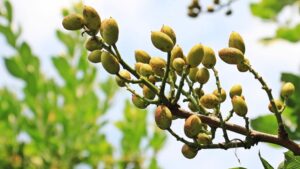
Why the Future Is Still Looking Bright for Pistachio Growers By David Eddy|June 6, 2023 Planting of the popular nut crop continues as consumption of pistachios grows, though tariffs cloud the horizon.
Watch As Organic Weed Control Comes Natural for This Almond Grower (Video) Posted by Paul Rusnak|May 29, 2023 Managing weeds without herbicides is a challenge. Learn how Burroughs Family Orchards in California is succeeding in its approach.
California Tree Nut Growers Bat Lead Off in Climate Change Workshops By David Eddy|May 22, 2023 First of a series of learning opportunities launches to address potentially massive impact on the state’s specialty crops.
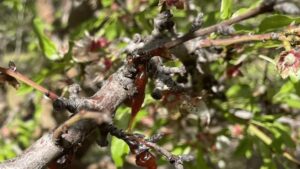
California Growers See Wave of Pathogen Pressure in Wake of Atmospheric Rivers By Emily C. Dooley, UC Davis|May 18, 2023 Researchers say rare plant disease outbreak of Phytophthora syringae similar to El Niño-influenced events during the 1990s.
What Is the 2023 California Almond Crop Forecast Looking Like So Far? Posted by Paul Rusnak|May 15, 2023 Thanks in large part to recent wild weather impacts, report from USDA NASS indicates yield per acre could be the lowest in nearly 20 years.
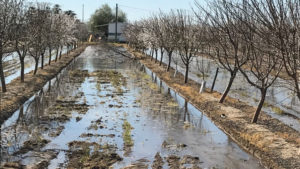
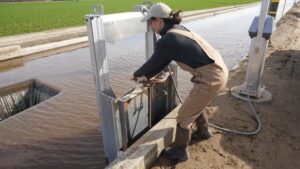
Storm-Induced Flood Concerns a Reality for Tree Crops By Trevor Suslow|May 2, 2023 Prolonged flooding has potentially serious disease impacts beyond food safety.