


Why Trial and Error Is a Way of Life and Learning for Vegetable Growers
 April 28, 2026
 As a barely reformed science geek, I’ve always been drawn to trials. They feel decisive. Clean. Disciplined. At least, that’s how my 8-year-old self saw them when I hauled a microscope into a neighbor’s greenhouse to study waterborne microbes. Back then, discovery felt inevitable. Set up the experiment, observe, and the answer reveals itself.
That’s not how it works. And it certainly isn’t how it works on a vegetable farm.
A wet spring has a way of rewriting even the best-laid plans. Planting windows tighten. Trials are delayed. And what was supposed to be a thoughtful start to the season starts to feel rushed.
We tend to think of trials as a clinical process — compare A with B and get a clear answer. In reality, growing conditions rarely cooperate. Extension researchers will tell you how often studies are compromised by factors outside their control — a disease that never materializes, or results that vary from one field to the next. Even successful trials often reflect a combination of practices rather than a single, clean winner.
The reality is, farming isn’t a controlled environment. It’s a system full of moving parts, and the goal isn’t to eliminate that variability. It’s to make sense of it.
So, when you’re considering a new piece of equipment, a production change, or a different input, it’s fair to question the results. If conditions aren’t typical, can you trust what you’re seeing? And when time is tight, does it make sense to invest energy in something that won’t pay off this season?
But that’s the wrong expectation.
Trials aren’t about getting perfect answers in a single season. They’re about reducing uncertainty over time.
That’s one reason I wanted to profile Nature’s Reward’s Mark Mason for American Vegetable Grower. His operation is built around ongoing trialing — not to prove a point in a single pass, but to learn, adjust, and make better decisions year after year.
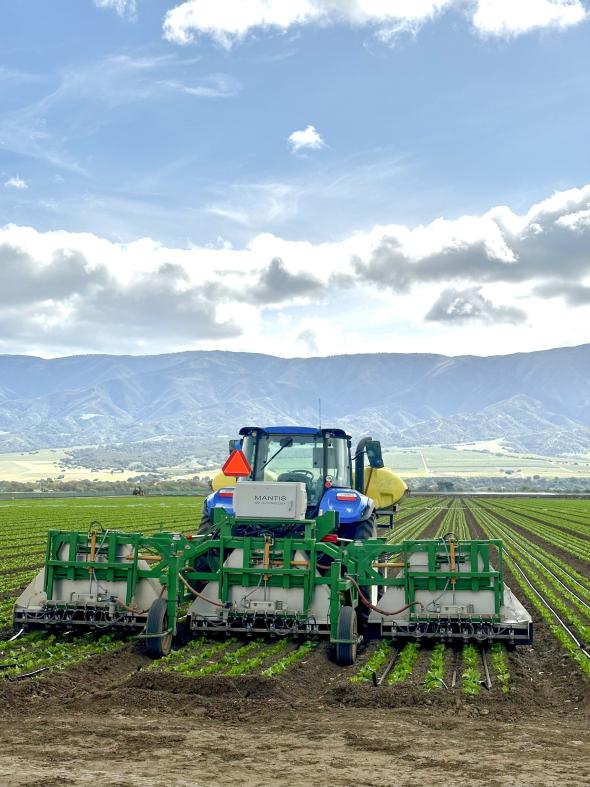
Running trials in production fields helps separate promising ideas from tools that
won’t hold up at scale.
Photo: Nature’s Reward
Because on a farm, decisions are rarely made under ideal conditions. The value of a trial isn’t that it delivers certainty. It’s that it helps you make better decisions — even when conditions are far from ideal.
Subscribe Today For
