

Embracing the Radical Basics of Farming a Successful Recipe for The Chef’s Garden
 January 1, 2025
 The conference room at The Chef’s Garden is lined with floor to ceiling bookshelves. The books filling them are not for show. No leather-bound sets here. Rather, a mismatched, dog-eared mix of farming and business books pack the shelves. Feeding the mind with not only production ideas but also with books focusing on customers, financial health, and strategy began with Bob Jones and Lee Jones’ father. They’ve taken his lead and enthusiastically expanded upon that.
View all
It has led the brothers in surprising directions. Lee Jones is the public face of the operation as Farmer Jones, with a signature look, books, television appearances (and now a series), and building trust with some of the top, most celebrated chefs in the country.
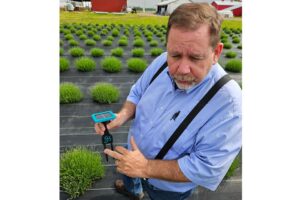
Bob Jones is the behind-the-scenes farmer, pushing the farm to a stronger future. And the future, in Jones’ eyes, is regenerative farming.
Jones’ push for regenerative farming practices isn’t from external pressure. The farm’s main customer base, high-end restaurants across the country, want flavor, beauty, and a continuous supply.
The Chef’s Garden expanded to include a direct-to-consumer customer, which does care about the issue.
“Home consumers are asking much more pointed questions about growing practices and about nutrient density and antioxidant content,” he says.
But it makes up only about 10% of its customer base.
So what’s driving the Joneses? A desire for a stronger, more stable business for generations to come.
“How the farm ecosystem is functioning is a reflection of our management practices. It’s either regenerating or degrading the farm,” Jones says. “Probably the very best definition I ever heard of regenerative farming is you did not inherit the land from your grandparents. Rather, you’re borrowing it from your grandchildren.”
What Is Regenerative Farming?
Regenerative farming is not a destination you can arrive at, Jones says. It’s a process of continuously striving for a healthier farm, industry, and community.
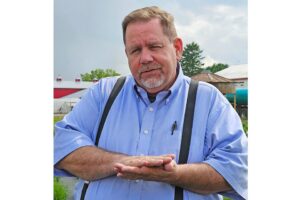
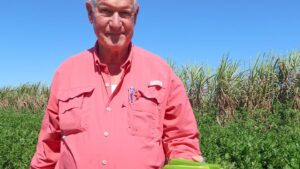
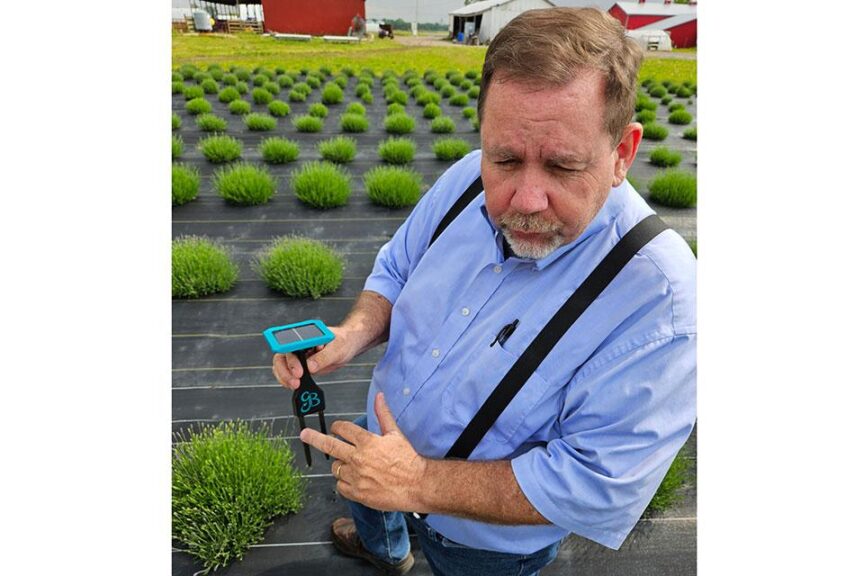
Bob Jones
Photo by Carol Miller
“We talk a lot about healthy soils, healthy plants, healthy people, healthy environment, and understanding how you get there,” he says.
Organic farming, in contrast, is based primarily on excluding synthetic amendments and controls, Jones says.
“But there is no testing protocol required to be certified organic,” he says. “There’s no soil test for mineral balance. There’s no soil test for the biological life of that soil, for water infiltration, or the physical structure. And there certainly is not testing protocol for mineral density or the cleanliness of the food.”
Regenerative farming is not just about soil health, Jones says. It’s also focused on a farm’s social responsibility and how you treat your workers.
New Practices Adopted
“The tenants of regenerative farming are diversity — biological diversity and plant species diversity. It’s also about reducing tillage and reducing chemical inputs,” Jones says.
The nature of vegetable farming is not a comfortable fit for that philosophy, he points out. It’s difficult to grow carrots and potatoes without disturbing the soil.
Take one practice The Chef’s Garden adopted 15 to 20 years ago to reduce herbicide use.
“We started a process called stale seed beds. In the spring, we put our pre-plant fertilizer down to prepare those beds for seeding. Then we would let the weeds germinate, not emerge, but germinate. We would then till that bed about 2-inches deep.”
Then repeat with a second shallow tillage after a second flush of weeds. Only then would they plant their small, seeded crops.
“We were able to grow those crops without any synthetic herbicide of any kind. But we were absolutely decimating our soil biology,” Jones said.
It destroyed the beneficial fungal systems and microbial biomass. In exchange for no weeds, he had to spoon feed the crops to make up for the drop in nutrition in the soil.
“We had to look at what we were trying to accomplish and then make changes,” he says.
One change? Jones is trying to adopt a no-till system where he can.
“I have not figured out how to no-till carrots and beets yet. I’m working on it, but I haven’t figured that out,” he says.
In fact, he’s on the hunt for growers who are currently operating with a no-till or strip-till system at a larger scale to share ideas and learn from.
That’s part of Jones’ strategy. He seeks out research and those who have had success in the methods he wants to adopt and does his best to figure out how they would work with his soil, his labor situation, and his crops.
Regenerative ideals can seem out of reach.
“We know going in that it’s a nearly impossible task. But how close can we get?” he says.
A few years ago, Jones set up an on-farm lab. He uses it for several purposes – testing how lighting affects flavor, nutrient content, etc. He’s staffing it with researchers who can also chase down soil health markers like total microbial biomass, Haney scores, and fungal-to-bacterial ratios.
“Different vegetable crops want bacterial dominant soil. Others want fungal dominant — something we never thought about before,” he says.
The Chef’s Garden team is attempting to correlate growing practices to nutrient density of the vegetables they grow. They are now also collaborating with medical professionals on research to link soil and plant health to human health.
Better understanding his soil is helping him better plan crop rotations. He’s experimenting with different cocktails of cover crops to encourage fungal or bacterial growth based on what he plans to grow in that field.
“We’re now planning what’s going to happen on that land in five years,” he says.
Getting Certified
A sign of how early the regenerative movement is can be seen in the number of certifying bodies available. There are at least a half dozen, each with a slightly different take.
“It reminds me of food safety some 20 years ago,” Jones says. “Which auditing body are you going to use?”
The regenerative movement began in ranches with livestock, focusing on soil health.
The first certifier Jones worked with reflected those roots. It had a pass/fail type system, where a farm either meets a set of standards or doesn’t earn the certification. Since most vegetable farms till soil, it was a poor fit for a vegetable farm. It would be difficult to pass.
American Vegetable Grower’s GROW STRONGER initiative brings you positive stories from progressive growers filled with innovative solutions to help you grow a stronger future.
So Jones instead is working with Regenified (Regenified.com). It has a tiered rating system. A farm joining the program is assessed and placed on a baseline where it begins. They are then expected to improve their rating within a few years.
“It’s very sound, robust science,” Jones says.
With a series of tests, Jones established a baseline of what is normal soil health for The Chef’s Garden. From there, he’s looking at a number of methods to see what makes a difference. Less tilling, for one.
Creating a farm strong enough to provide a living for generations to come is a quest that seems to have no end. But the Jones brothers are well on their way to that goal.
“We are not living in a glass house throwing stones by any stretch,” Jones says. “We just think that there’s a better way to farm than the way we farmed as I grew up in this industry, and we think that there’s a better way to do that. We can no longer farm the way we used to, just because Dad and Grandpa did it that way. We must be business people who farm rather than just being farmers!”
At a Glance: The Chef’s Garden
Owners: Bob and Lee Jones
Year founded: 1987
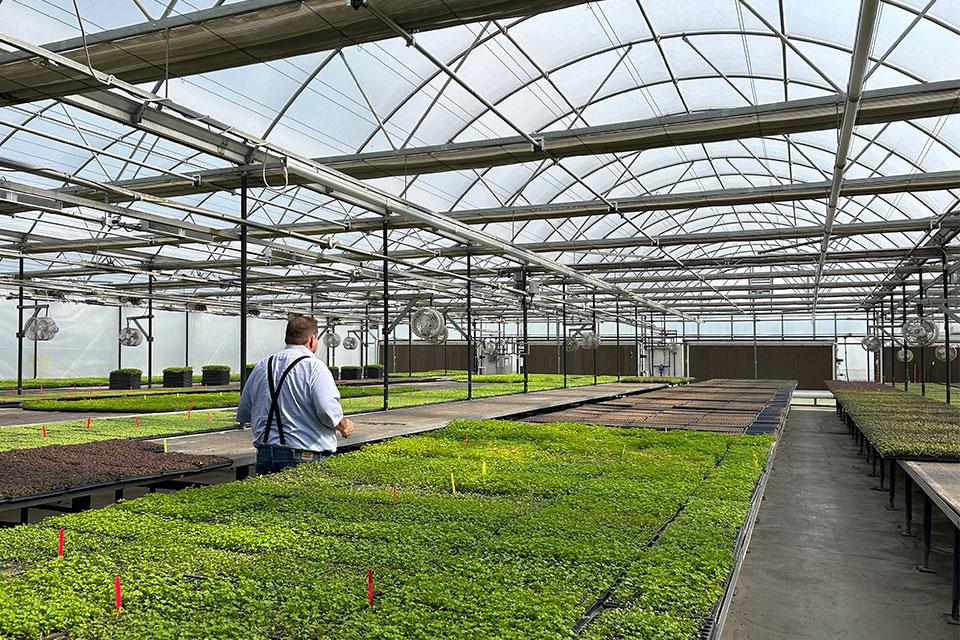
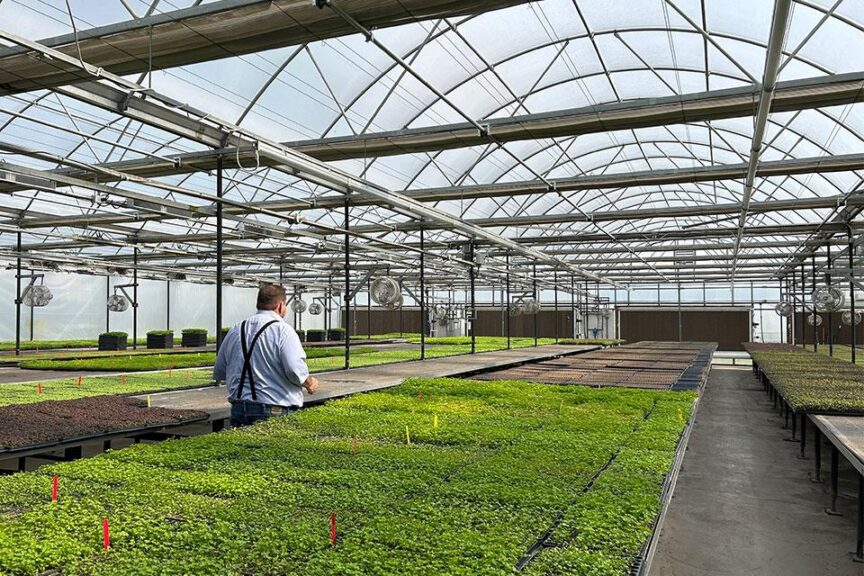
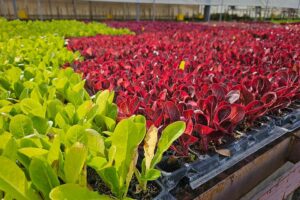
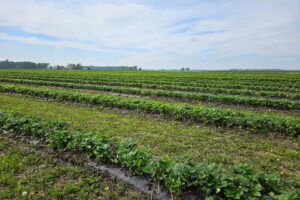
Size: 400 acres in total, 100 acres in annual outdoor vegetables, 15 acres in covered production 250 acres in multi-species cover crop
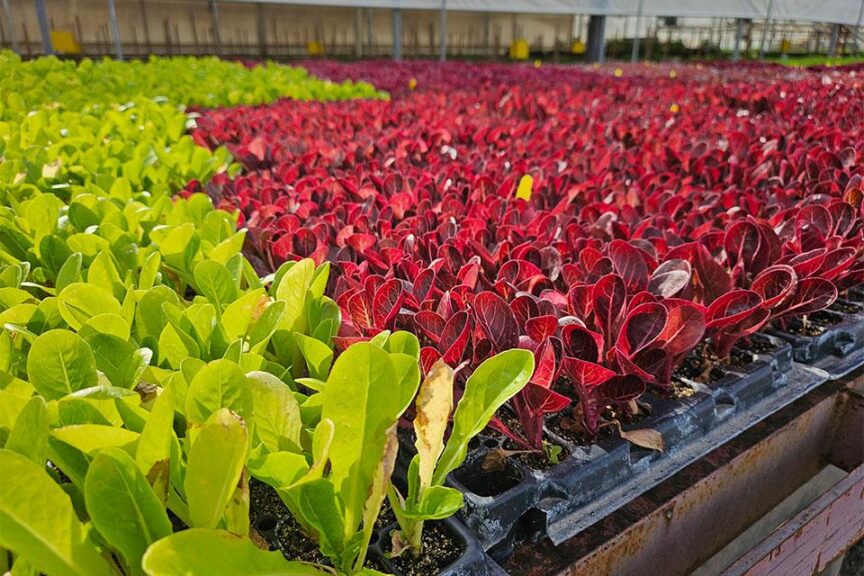
Crops: 600 varieties of edible plants
Customers: Restaurants, retail to home consumers both online and on-site (farm market)
Subscribe Today For