Meet the New Leader of the California Citrus Research Board Posted by David Eddy|September 18, 2019 Find out which industry veteran is taking the reins of the organization after nearly a year-long search to fill the position.Read More
The Hidden Margin Leak Between Projected and Actual Harvest Dates By Muhammad Abdullah, Folio3 Agtech|June 2, 2026
New Round of USDA Aid for Specialty Crops Good News for California Walnuts By California Walnut Commission|June 1, 2026
Best Practices Issued for Dealing with Deadly Citrus Disease in California Posted by David Eddy|June 24, 2019 Industry committee endorses voluntary methods for citrus growers’ response to the deadly disease.
Can New Bactericide Delivery Machine Save Florida Citrus? Posted by Frank Giles|February 19, 2019 HLB-fighting tool would fit on traditional farm equipment like tractors or ATVs.
HLB Detections Soar in California Citrus Trees Posted by David Eddy|January 23, 2019 Nearly 700 infected trees were detected in 2018, more than double the number found in 2017, though none – yet – in commercial groves.
EPA Approves New Product for Control of Citrus Greening Posted by Frank Giles|September 13, 2018 Bullet HLB combines disease management and enhanced nutrition to improve tree health.
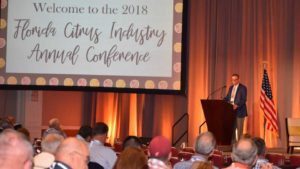
Florida Citrus Growers Happy to Put Hurricane Irma in Rear View By Frank Giles|June 21, 2018 Annual industry conference attendees in good spirits despite tough year.
Report: Single Big Breakthrough Unlikely for Citrus Greening Cure Posted by Frank Giles|April 10, 2018 National Academies of Sciences, Engineering, and Medicine calls for both basic and applied research for short- and long-term solutions.
USDA Awards Grants to Help in the Fight Against Citrus Greening Posted by Frank Giles|January 18, 2018 Nearly $17 million will support important research projects aimed at helping growers live with the disease.
For First Time, California is No. 1 in Citrus Posted by David Eddy|December 18, 2017 Florida slips to No. 2 as its orange groves have been decimated by HLB, especially in the wake of Hurricane Irma.
HLB Detected in California’s Historic Home of Citrus Posted by David Eddy|August 1, 2017 Riverside County has a storied history of citrus production and is home to California Citrus State Historic Park, which preserves the cultural landscape of the citrus industry.
Florida Company Seeks Approval of Novel Approach to Fight Citrus Greening Posted by Frank Giles|April 12, 2017 USDA prepares impact statement on technology that introduces a spinach defensin protein into trees via the tristeza virus.
USDA Announces Nearly $22 Million in HLB Research Funding Posted by Frank Giles|April 12, 2017 Agency has invested $57 million on the deadly citrus disease since 2014.
Florida Citrus Growers get Another Bactericide Booster Posted by Frank Giles|January 11, 2017 EPA Section 18 re-issued for treatment of HLB-infected trees.
California Citrus Growers Can Target Residential Trees Posted by David Eddy|October 24, 2016 Program sponsored by Bayer allows growers to identify and request removal of abandoned trees that pose a threat to their groves.
First Stab At Florida Citrus Production Predicts Dire Decline Posted by Frank Giles|August 15, 2016 Elizabeth Steger estimates crop will drop by 26%.
New Program Targets Abandoned California Citrus Trees Posted by David Eddy|May 3, 2016 Bayer and California Citrus Mutual have teamed up to help protect the state’s commercial citrus industry from deadly citrus greening.
Growers, Industry Leaders Weather The Storm At 2016 Florida Citrus Show By Paul Rusnak|February 1, 2016 Not even an El Niño-fueled, two-day soaker can keep a flood of attendees from the annual gathering.
Asian Citrus Psyllid Quarantine Area In California Expanded Again Posted by David Eddy|January 25, 2016 A zone of nearly 100 square miles has been declared in Fresno County following new detection.
New Citrus Greening Nutritional Mix Enters The Market Posted by Frank Giles|December 1, 2015 H.J. Baker says product aims to improve root density and nutrient uptake.
California Technology Summit Targeting Early Detection Of Deadly Citrus Disease Slated Posted by David Eddy|November 20, 2015 California Citrus Mutual and the Citrus Research Board to hold citrus greening meeting Dec. 1 at the Visalia Convention Center.