Vegetables
Agricultural Marketing Service funds will be allocated to states for research, increasing opportunities, protecting pollinators, organics, and new and beginning farmers.
An extraordinarily wet dry season precipitates massive pumping procedure to relieve high-water levels in two critical locations.
Study shows a lack of consumer awareness is hurting sales outside the Sunshine State.
The commitment from Western Growers brings the total campaign funding for the Center for Produce Safety to more than $10 million.
The biofungicide will be distributed to agricultural markets in California, Oregon, Washington, and Arizona.
New Hampshire experiment station scientists conduct a winter trial in high tunnels to help growers make decisions on which varieties to plant and when.

The Biocontrols USA 2016 Conference & Expo explored new ways to make biological control a mainstream part of your pest management program.
Take note of these nine bean varieties boasting comprehensive disease-resistance packages and wide adaptability.
El Niño puts an exclamation point on the end of a season filled with above average temperatures and precipitation.
Manufacturers and suppliers discuss how they are fine-tuning today’s equipment to meet your needs.
Florida Commissioner of Agriculture Adam Putnam points out the power females have provided to farming.
EPA approves new crop registrations in California, Florida, and Pacific Northwest for Luna.
Know the symptoms of an infestation, when to scout, and the chemical and cultural control options available.
The discussion focused on the Trans-Pacific Partnership, with the Produce Marketing Association calling for strong implementation and enforcement.
Samples from Henry’s Farm in Virginia tested positive for Listeria.
Reports show region pounded by above-average rainfall during February.
The agency plans to assess consumer health risk from the use of raw manure as fertilizer in growing crops.
Mobile-responsive design to aid in growing use on smartphones, tablets, and laptops in the field.
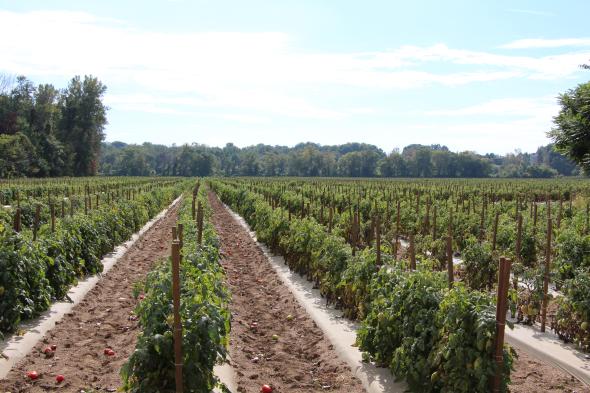
In the Mid-Atlantic region, wet conditions have affected tomato production, presenting growers with a variety of tough diseases to manage.