


New Leadership at Little Bear Produce Geared To Grow Big
 May 6, 2026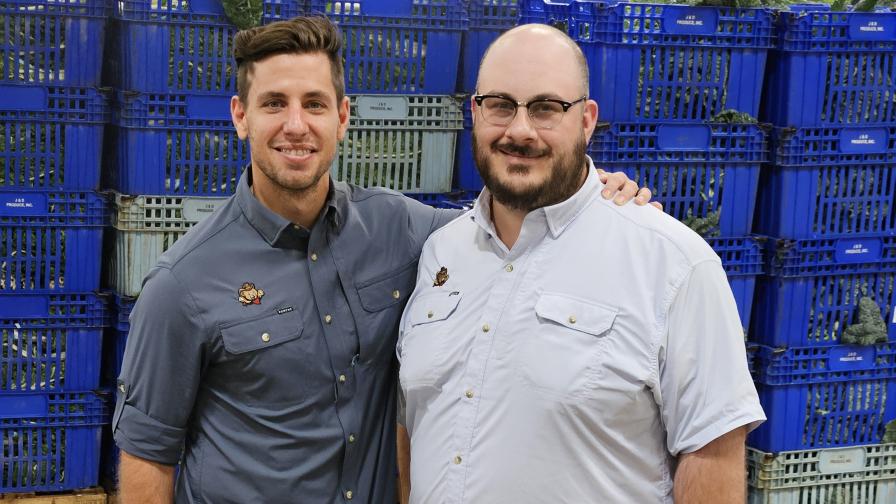
The new leadership at Little Bear Produce: James V. Bassetti III, CEO and right Bruce Densten COO.
Photo: Carol Miller
About 10 years ago, Little Bear Produce brought in a consultant to help the company think about its future. The result was a visual that stuck with James Bassetti.
The organizational chart wasn’t especially deep. It was wide — almost comically wide — because so much of the company ran through one person: founder Jimmy Bassetti.
For years, that structure worked.
It helped build Little Bear from a two-person operation into a vertically integrated business with about 200 employees across multiple states and countries. Along the way, the company carved out a reputation for quality — not just in how it packed and shipped product, but in how it evaluated what to grow, from flavor and nutrition testing to close collaboration on varietal selection.
But as the company grew, that same structure became harder to sustain.
“That’s when it really clicked,” says Bassetti, Jimmy’s son and now CEO.
When Growth Starts to Strain the Model
Bassetti spent his early years in the business moving from department to department, learning how everything fits together. By his fifth or sixth year, he began to see the pressure points.
“It was really challenging for my father to manage it the way he was,” he says.
Everything still funneled through Jimmy. Managers could weigh in, but the final call — and the responsibility that came with it — rested with him.
That model created speed and consistency. It also created a kind of insulation. People could advise, but they didn’t fully own the outcome. As the company expanded, that became less sustainable.
Working alongside Little Bear’s Senior VP of Business Affairs Bret Erickson and outside advisors, Bassetti began to push for a different structure — one that could carry the business forward without relying on a single decision-maker.
But changing a system that worked was anything but straightforward.
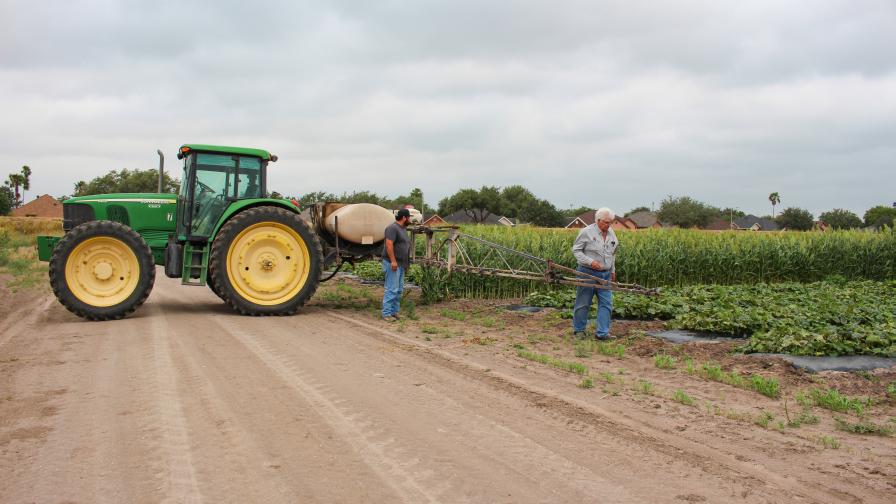
Little Bear Produce Farm Manager, Tony Brunnemann (right) checks in with his sprayer operator.
Photo: Carol Miller
Changing the System — and the Mindset
The challenge wasn’t just operational. It was deeply personal.
“I have no credibility compared to what my father has accomplished,” Bassetti says. “He has a history of success. I have nothing. Just ideas.”
At one point, Bassetti, Erickson, and the HR team developed a new organizational structure with the help of a consultant. When they presented it, it fell flat.
“There were moments where I felt at a loss,” he says.
Push forward and risk friction? Or adapt to a system that had already proven itself?
That tension played out not just in the business, but in their relationship. Bassetti recalls his father telling him that at the same age, he had pushed his own father to step back — to take on more responsibility and move the business forward.
At times, that meant stepping in. At others, it meant stepping back — even when that created friction on both sides.
The Hard Part: Letting Go of One Decision-Maker
As Little Bear worked to distribute decision-making, another challenge surfaced.
Many of its leaders had earned their roles by being the ones who always got things done.
“They were the best doers,” Bassetti says. “We left out the part where they had to lead.”
Leadership requires a different skill set — delegation, communication, and the ability to develop others.
“You have to think about replacing yourself,” he says. “You can’t do both.”

Generations of successful vegetable growing. Jimmy (left) and James Bassetti. Photo by Palacios Photography.
That shift required investment in management training, along with bringing in outside hires to introduce new perspectives. Little Bear also began equipping its leaders with better information — investing in systems, sharing more financial data, and giving decision-makers clearer visibility into the areas they own.
At the same time, the company added key leadership roles, including a CFO and a President of Farming, bringing experience from larger operations. Those additions, Bassetti says, have helped elevate both the team and the business.
“You’re losing a lot of institutional knowledge,” Bassetti says. But pairing new perspectives with long-tenured employees has been critical to making the transition work.
The company also had to rethink how it trained people. For years, it relied on a fast-moving, hands-on approach.
“You’d ride around for a couple weeks, and then you were baptized by fire,” he says.
That worked when the goal was execution. It didn’t work when the goal became building a leadership team.
Bassetti is candid about his own learning curve.
“I made a lot of decisions that I was not prepared to make,” he says. “And I made a lot of mistakes.”
That experience reshaped how he approaches leadership, helped him appreciate the burden of a decision maker.
“And it gave me the lesson of grace,” he says.
Empowering others means accepting that mistakes are part of the process. And leadership means you ask them what they learned from what didn’t work.
That shift hasn’t been easy. For many employees, stepping into decision-making roles comes with pressure — especially when they’re trying not to disappoint someone they deeply respect.
A Stronger System — in a Tougher Market
All of this is happening at a moment when the industry itself is shifting.
Little Bear built its reputation on quality and service. That hasn’t changed. But the environment around it has. Consumers are more price-sensitive. Retailers are under pressure. Input costs continue to rise.
The company is now taking a harder look at how it operates, seeking ways to maintain quality while improving efficiency.
“We just can’t do it the way we used to do it,” he says.
That doesn’t mean lowering standards. It means finding new ways to meet them.
The instinct that once lived in one person is now being spread across the company — supported by systems, data, and a broader leadership team.
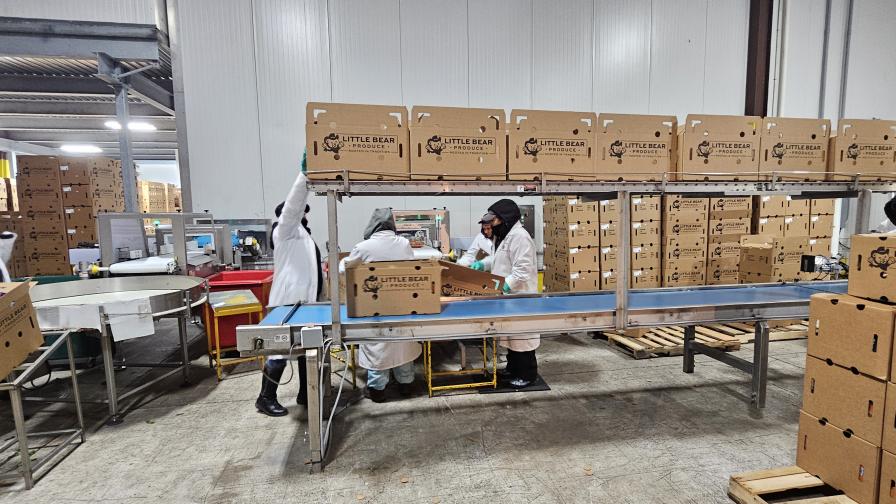
Little Bear Produce is creating system efficiencies to counter market stresses.
Photo: Carol Miller
Still in the Middle of It
Bassetti is clear that the work isn’t finished.
“This is our most significant cultural change,” he says.
In fact, the company is still in the middle of it — making major adjustments to how it operates and goes to market, while watching closely to see how those changes play out.
“There’s going to be moments where we think we should go back to what we know,” he says.
But he also knows why that’s not an option.
The environment that once rewarded instinct alone has changed. The risk is higher. The margin for error is smaller.
Little Bear isn’t walking away from what made it successful. It’s trying to build something that can carry that success forward — without relying on one person to hold it all together.

American Vegetable Grower’s GROW STRONGER initiative brings you positive stories from progressive growers filled with innovative solutions to help you grow a stronger future.
At a Glance: Little Bear Produce
Owners: Bassetti Family
Founded: 1980s by Jimmy and Diane Bassetti
Headquarters: Edinburgh, TX (with operations scattered regionally and internationally)
Crops: Leafy greens, onions, and a range of fresh vegetables
Customers: Retailers, wholesalers, and foodservice buyers
Subscribe Today For
