

Why Thinking Like a Farmer Is So Important at Erick Nielsen Enterprises
 August 29, 2026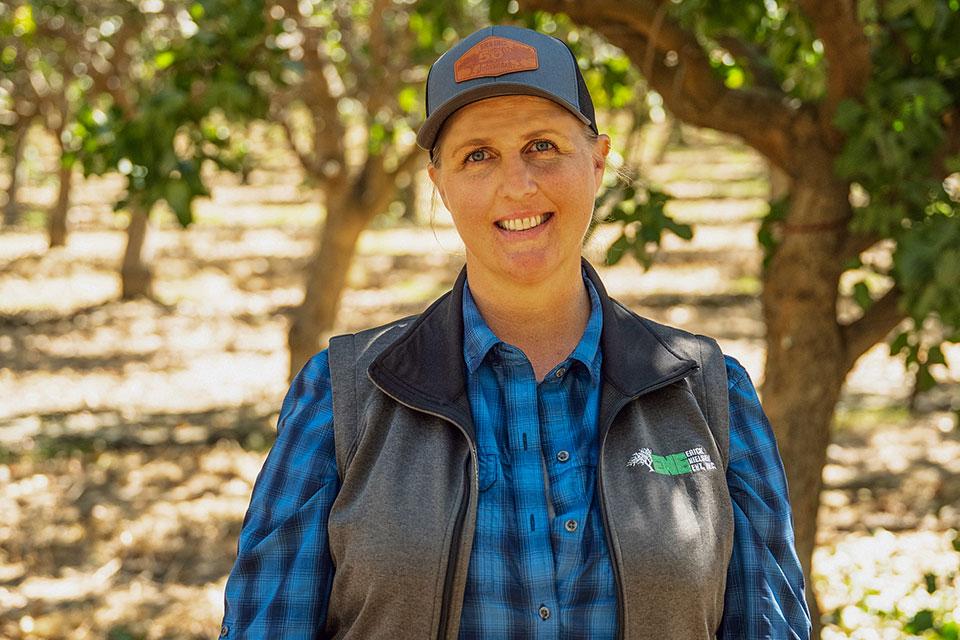
Hilary Porter, CEO of Erick Nielsen Enterprises in Northern California.
Photo: Paprika Studios
Before harvest begins, Hilary Porter likes to slow down. Walking through a prune orchard in late summer, she takes in more than the fruit. She notices the sweetness in the air.
“When you walk into a prune orchard that is ready to be harvested, you can smell it,” Porter says. “You can smell the ripeness. You can smell the sugar. You can smell the sweet fruit.”
For Porter, that unmistakable aroma reflects a lifetime spent in the orchard.
Today Porter serves as CEO of Erick Nielsen Enterprises (ENE), the family’s mechanical orchard services company, but her perspective remains firmly rooted in farming. Before focusing on ENE, she managed Nielsen Family Farms alongside her father, Erick. The family’s multigenerational Sacramento Valley operation encompasses fewer than 200 acres of prunes, almonds, and table olives; ENE works with growers throughout California. Together, those experiences give Porter an unusually broad perspective on California’s tree fruit industry.
“I think, from both that farming perspective and the work we do for our customers, we really partner with our growers,” Porter says. “Wearing our farmer hat and thinking like a farmer helps us do our best work for our customers.”
For Porter, thinking like a farmer is more than a philosophy. It is an approach shaped by years of farming and one she now brings to helping other growers.
GROWING UP IN THE ORCHARD
Long before she became CEO, Porter learned agriculture one job at a time.
As a child, she followed harvest equipment through prune orchards, gathering fruit the machines had missed. Later came irrigation, suckering trees, and nearly every other task involved in raising a crop. Those early experiences gave her the practical knowledge she still relies on today.
Although Porter now leads Erick Nielsen Enterprises, she laughs at the formality of her title.
“We’re not that big of a business,” she says. “It sounds really fancy to say CEO. That’s my official title, but that really means I do a lot of little different things because we all wear many hats in a family business.”
That attitude reflects the way the Nielsens have operated for generations.
The family has farmed in California since the early 1900s, with prunes at the heart of the operation. Today, Porter’s brothers, Garrett and Gavin, work alongside their father, Erick, on the farming side, while Porter leads ENE. Her sister Heather handles marketing, social media, and executive administration for ENE, and sister Ashley is becoming more involved in the company as well.
“It’s truly a family business,” Porter says.
MORE THAN A CUSTOM OPERATOR
While Nielsen Family Farms grows crops, Erick Nielsen Enterprises helps other growers grow them more efficiently.
Rather than providing routine custom farming services, ENE specializes in mechanical harvesting, pruning, fruit thinning, and brush shredding — highly specialized jobs requiring experienced crews, sophisticated equipment, and precise timing. During critical windows of the growing season, the company becomes an extension of growers’ own operations.
Working with 600 to 800 growers each year gives Porter a statewide perspective on California agriculture. Every orchard offers another opportunity to observe production systems, management styles, and practices.
“What we’ve seen over the years, both in our own operation and as we’re going across the state, is that we’re always learning,” Porter says. “Farmers are great about learning from one another.”
One lesson has stood out over the years: Orchards are built long before the first harvest.
Ground preparation, irrigation design, and soil health lay the foundation for decades of production. Cutting corners during orchard establishment can affect profitability for the life of the planting.
“You don’t want to cut corners there,” Porter says. “That’s going to impact your productivity for the life of the orchard.”
That perspective also shapes Porter’s outlook on California’s prune industry. Working with growers across the state gives her a front-row seat to labor shortages, rising costs, and tightening margins while reinforcing her confidence in the industry’s future.
“It’s not a bad time to be a prune grower,” she says.
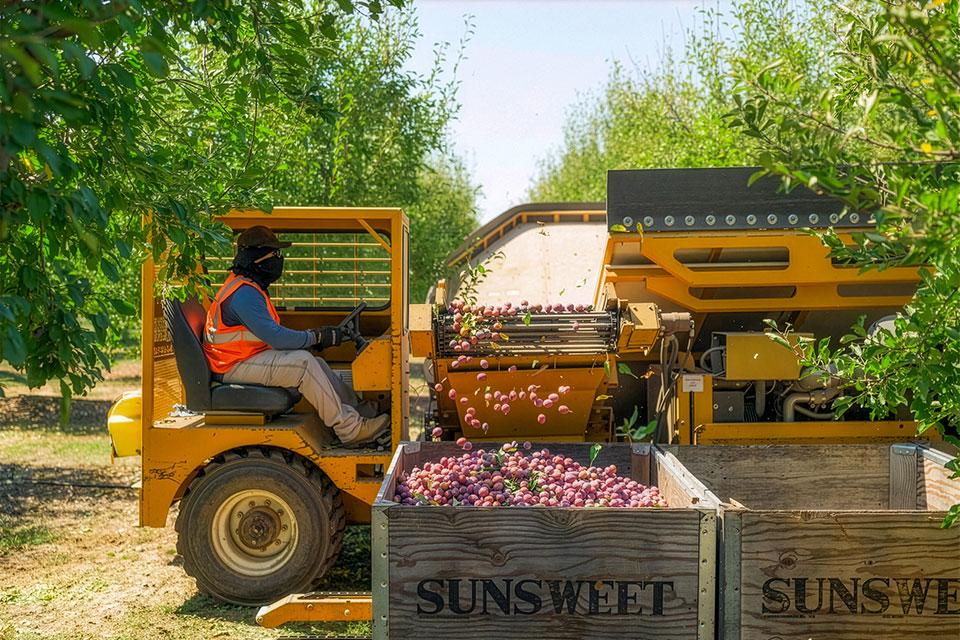
Erick Nielsen Enterprises provides specialized mechanical services, including prune harvesting, to growers throughout California.
Photo: Paprika Studios
LOOKING BEYOND THIS SEASON
“Farming in California is tough right now,” Porter says, “but we’re resilient.”
That confidence comes from what she sees across the industry. Despite economic pressures, the prune industry continues to adapt and evolve.
“We’re farming long term,” she says. “You’re making decisions for decades.”
That long-term view becomes especially important when labor costs, production expenses, and profitability are under constant pressure. The challenge is to balance the next harvest against the next generation of orchards.
“You’ve got to keep that balance,” she says. “You’re still aiming for a good, quality piece of fruit with good size and good sugar. You can’t be too short-sighted.”
For Porter, successful farming has always been a long game.
GROWING NEW CONSUMERS
Just as growers continually improve their orchards, Porter believes the prune industry must continually improve the way it reaches consumers.
She points to the University of California’s prune breeding program, now led by Sarah Castro, as an important investment in the crop’s future. New cultivars, including the promising Yolo Gold selection, demonstrate that innovation remains alive in California orchards.
But she believes the industry’s biggest opportunity extends beyond breeding.
“I think we’re seeing this shift toward food as medicine,” she says.
As consumers increasingly seek foods that contribute to long-term health, Porter believes prunes are well positioned to meet that demand. Once known primarily for digestive health, prunes are now recognized more broadly for supporting bone health and providing antioxidants.
“I think that’s something a lot of farmers are realizing,” she says. “Consumers really want to utilize food as functional medicine in their day-to-day life.”
To capitalize on that trend, she believes the industry must continue promoting California’s premium fruit while introducing prunes to a younger generation of consumers.
“We need to continue to push to create new markets,” Porter says, “and really connect with that next generation.”
SMALL IMPROVEMENTS ADD UP
Years spent managing the family farm and now leading an agricultural services company have reinforced another lesson for Porter: Progress rarely comes through one dramatic breakthrough. Instead, it is built one improvement at a time.
Like many California growers, Porter identifies labor and rising production costs as the industry’s biggest challenges. At the same time, she believes producers have more opportunities than ever to improve efficiency.
From improved business software and precision irrigation to robotics and artificial intelligence, new technologies are helping growers make better decisions in both the orchard and the office.
As CEO of Erick Nielsen Enterprises, Porter sees many of those advances firsthand. Helping growers improve efficiency has always been central to the company’s mission, and she expects technology to continue creating new opportunities.
Still, she believes lasting success often comes from incremental gains.
“If you can have a 5% improvement here, if you can save 10% there, all those things add up,” she says.
For growers operating on narrow margins, those small gains can make a significant difference.
LEARNING FROM EVERY ORCHARD
After years spent managing her family’s orchards and working with growers across California, Porter believes successful growers share one defining trait: They never stop learning.
The best growers invest in the fundamentals, avoid unnecessary shortcuts, and remain open to new ideas. They understand that every season presents another opportunity to improve.
That willingness to learn, Porter says, has always been one of agriculture’s greatest strengths.
As this year’s prune harvest gets underway, Porter says growers are generally looking at a promising crop despite an earlier-than-normal season. The focus now turns to maximizing fruit size, sugar development, and harvest timing — decisions built on months of preparation and years of experience.
For Porter, it all comes back to walking quietly through a prune orchard, breathing in the unmistakable sweetness of fruit that is nearly ready.
For someone who has spent a lifetime thinking like a farmer, that is all she needs to know it is harvest time once again.
Subscribe Today For
