Disease Control
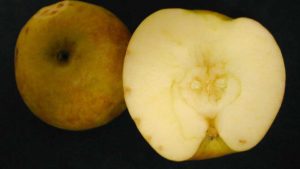
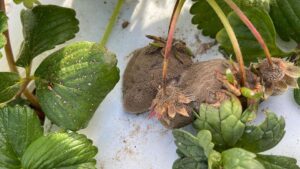
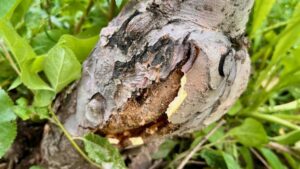
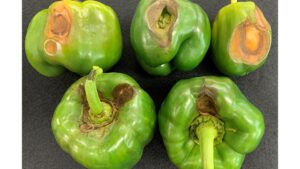
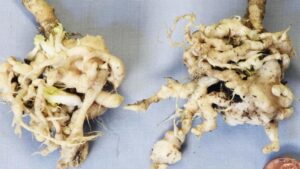
Are you an ace at spotting symptoms of plant disease? Take a mini quiz and test your knowledge on this destructive malady.
Is little cherry disease the HLB of the PNW? Conceivable or not, the problem does have the attention of many Washington state cherry growers.
What pests were particularly problematic for fruit and nut growers in the past year? Answers revealed as part of 2025 State of the Industry Survey.
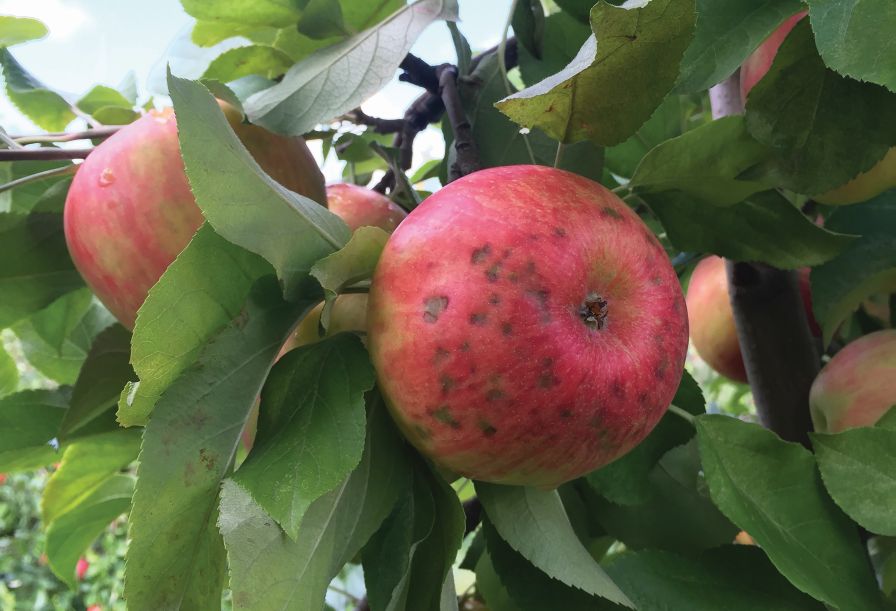
Beleaguered by bitter pit, ‘Honeycrisp’ growers again scrutinize their Calcium treatment levels and distribution.
A newly identified race of the pathogen responsible for downy mildew in lettuce has been confirmed by International Bremia Evaluation Board – United States.

Plants, pathogens, and…Palpatine? Learn more from genomic insights into onion center rot.
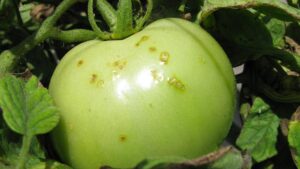
The pathogen responsible for bacterial spot of tomato is spreading rapidly around the world. A new study shows show how the pathogen is diversifying.
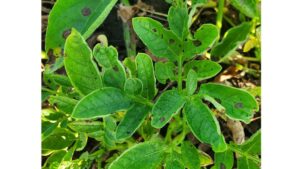
Early blight, caused by Alternaria solani, reduces potato yield and quality and is best managed with cultural practices and fungicides.
New plant diseases are becoming increasingly prevalent, requiring growers to adopt more proactive management strategies.
A small degree of Botrytis infection all but guaranteed in New York strawberry fields despite even the best fungicide spray programs.
A new anthracnose risk prediction model could be a big help for Michigan blueberry growers. See how it works.
Covering your bases means covering a lot when it comes to the puzzling rapid apple-tree decline (RAtD).
Fungicides are effective, but weather and crop variety also play a key role.
How growers are combating diseases through integrated management, using pathogen-free sites, resistant crops, and targeted crops.
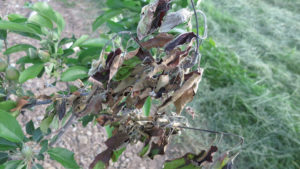
PGRs Apogee and Actigard, especially in combination, remain the best options to control shoot blight.
Plant residue decomposers, phosphite-based products used as preventive measures against fungal diseases.
Fungicide resistance turns Michigan growers into easy pickings for cherry leaf spot when wind and rain prevail. Scientists search for new options.
Scientists are working on a new project to fight plant diseases transmitted by psyllids — particularly the zebra chip disease, a pain for potato growers.
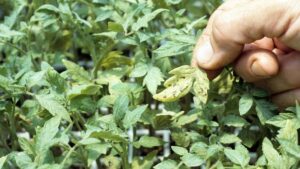
Federal grants to help researchers wrangle tomato spotted wilt virus (TSWV), a vector-borne disease of tomatoes, peppers, and scores of other plants.